Extremaduran cuisine
Extremaduran cuisine is the traditional style of cooking in the Extremadura region of Spain. It is characterized by its simplicity, variety, and the quality of its products, which are influenced by the region's climate, geography, and history.
History[edit]
The history of Extremaduran cuisine dates back to the Roman Empire, when the region was known as Lusitania. The Romans introduced the cultivation of olives and grapes, which remain important ingredients in Extremaduran dishes today. The Moorish influence is also evident in the use of spices such as cumin and coriander.
Ingredients[edit]
Extremaduran cuisine is based on the products available in the region. The most common ingredients include pork, lamb, game, fish from the rivers, vegetables, legumes, mushrooms, and fruits. The region is also known for its cheeses, such as Torta del Casar and Ibores cheese, and its wines, including Ribera del Guadiana.
Dishes[edit]
One of the most famous dishes in Extremaduran cuisine is Migas, a dish made with breadcrumbs, garlic, and various types of meat. Other popular dishes include Cochinillo, a roast suckling pig, and Caldereta, a lamb stew. Extremaduran cuisine also includes a variety of soups and stews, such as Gazpacho and Caldo de la caldera.
Desserts[edit]
Extremaduran desserts are typically simple and made with local ingredients. They include Perrunillas, a type of shortbread cookie, and Técula Mécula, an almond cake. Honey and figs are also commonly used in Extremaduran desserts.
See also[edit]
 | This Spanish cuisine–related article is a stub. You can help WikiMD by expanding the page. |

Extremaduran_cuisine[edit]
-
 Iberian pig
 -
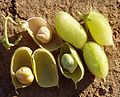 Chickpea pods


Medical Disclaimer: WikiMD is for informational purposes only and is not a substitute for professional medical advice. Content may be inaccurate or outdated and should not be used for diagnosis or treatment. Always consult your healthcare provider for medical decisions. Verify information with trusted sources such as CDC.gov and NIH.gov. By using this site, you agree that WikiMD is not liable for any outcomes related to its content. See full disclaimer.
Credits:Most images are courtesy of Wikimedia commons, and templates, categories Wikipedia, licensed under CC BY SA or similar.
Translate page: - East Asian
中文,
日本,
한국어,
South Asian
हिन्दी,
தமிழ்,
తెలుగు,
Urdu,
ಕನ್ನಡ,
Southeast Asian
Indonesian,
Vietnamese,
Thai,
မြန်မာဘာသာ,
বাংলা
European
español,
Deutsch,
français,
Greek,
português do Brasil,
polski,
română,
русский,
Nederlands,
norsk,
svenska,
suomi,
Italian
Middle Eastern & African
عربى,
Turkish,
Persian,
Hebrew,
Afrikaans,
isiZulu,
Kiswahili,
Other
Bulgarian,
Hungarian,
Czech,
Swedish,
മലയാളം,
मराठी,
ਪੰਜਾਬੀ,
ગુજરાતી,
Portuguese,
Ukrainian

