External pudendal veins
The external pudendal veins are an important component of the venous system in the human body. They play a crucial role in the drainage of blood from the external genitalia and surrounding areas. In this article, we will explore the anatomy, function, and clinical significance of the external pudendal veins.
Anatomy[edit]
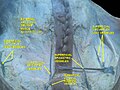
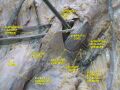
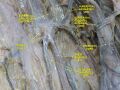
The external pudendal veins are a network of veins that are located in the perineum, which is the area between the anus and the external genitalia. They are part of the larger venous system of the pelvis and lower extremities. The veins originate from the dorsal vein of the penis or the clitoral vein in males and females, respectively.
From their origin, the external pudendal veins course through the perineum and drain into the greater saphenous vein or the internal pudendal vein. They receive blood from various structures, including the skin of the external genitalia, the perineal muscles, and the superficial fascia.
Function[edit]
The primary function of the external pudendal veins is to drain deoxygenated blood from the external genitalia and surrounding areas. They play a crucial role in maintaining proper blood circulation in this region. The veins transport the blood back to the heart, where it can be oxygenated and recirculated.
Clinical Significance[edit]
The external pudendal veins can be affected by various medical conditions, leading to potential complications. Some of the common clinical issues associated with these veins include:
1. Varicose Veins: Similar to other veins in the body, the external pudendal veins can develop varicosities. This condition occurs when the veins become enlarged, twisted, or swollen, leading to discomfort, pain, and cosmetic concerns.
2. Thrombosis: External pudendal vein thrombosis refers to the formation of blood clots within the veins. This can cause pain, swelling, and inflammation in the affected area. Prompt medical attention is necessary to prevent complications such as deep vein thrombosis or pulmonary embolism.
3. Pelvic Congestion Syndrome: This condition occurs when there is chronic pelvic pain due to the pooling of blood in the pelvic veins, including the external pudendal veins. It is more common in women and can be associated with hormonal changes, pregnancy, or pelvic inflammatory disease.
References[edit]
See Also[edit]
-
 External_pudendal_veins
 -
 External_pudendal_veins
 -
 External_pudendal_veins


Medical Disclaimer: WikiMD is for informational purposes only and is not a substitute for professional medical advice. Content may be inaccurate or outdated and should not be used for diagnosis or treatment. Always consult your healthcare provider for medical decisions. Verify information with trusted sources such as CDC.gov and NIH.gov. By using this site, you agree that WikiMD is not liable for any outcomes related to its content. See full disclaimer.
Credits:Most images are courtesy of Wikimedia commons, and templates, categories Wikipedia, licensed under CC BY SA or similar.
Translate page: - East Asian
中文,
日本,
한국어,
South Asian
हिन्दी,
தமிழ்,
తెలుగు,
Urdu,
ಕನ್ನಡ,
Southeast Asian
Indonesian,
Vietnamese,
Thai,
မြန်မာဘာသာ,
বাংলা
European
español,
Deutsch,
français,
Greek,
português do Brasil,
polski,
română,
русский,
Nederlands,
norsk,
svenska,
suomi,
Italian
Middle Eastern & African
عربى,
Turkish,
Persian,
Hebrew,
Afrikaans,
isiZulu,
Kiswahili,
Other
Bulgarian,
Hungarian,
Czech,
Swedish,
മലയാളം,
मराठी,
ਪੰਜਾਬੀ,
ગુજરાતી,
Portuguese,
Ukrainian

