Explosive cyclogenesis
Explosive Cyclogenesis is a meteorological phenomenon characterized by the rapid deepening of an extratropical cyclonic low-pressure area. The process is a significant event in weather systems, leading to the development of strong winds, heavy rainfall, and in some cases, severe weather conditions such as blizzards or thunderstorms. The term is often associated with the "bomb cyclone," a colloquial expression used to describe a cyclone that undergoes explosive cyclogenesis.
Definition[edit]
Explosive cyclogenesis occurs when the central pressure of a cyclone drops at a rate of at least 24 millibars in 24 hours, a criterion known as the "bomb" threshold. This rapid intensification results from a combination of atmospheric conditions, including significant temperature gradients, the presence of a jet stream, and the development of upper-level troughs.
Mechanism[edit]
The mechanism behind explosive cyclogenesis involves several key atmospheric processes. A strong temperature gradient between cold air masses from polar regions and warm air masses from tropical or subtropical regions creates an environment conducive to cyclone formation. The interaction between these air masses, along with the influence of the jet stream, enhances the cyclone's development. Upper-level troughs in the atmosphere can further amplify the cyclone's growth by increasing divergence aloft, effectively "pulling" air out of the cyclone and lowering the central pressure rapidly.
Impacts[edit]
The impacts of explosive cyclogenesis are wide-ranging and can be severe. The rapid development of a low-pressure system is often accompanied by strong winds, heavy precipitation, and significant weather hazards. Coastal regions may experience storm surges and flooding, while inland areas can face blizzards or heavy rainstorms. The severity of the weather conditions depends on the cyclone's path, strength, and the existing atmospheric and geographical conditions.
Examples[edit]
Historical examples of explosive cyclogenesis include the 1993 Storm of the Century in the United States, which affected a large portion of the Eastern U.S. with heavy snowfall, hurricane-force winds, and record low pressures. Another notable example is the Braer Storm of January 1993, which led to the lowest ever sea-level pressure recorded over the United Kingdom.
Research and Prediction[edit]
Advancements in meteorological research and technology have improved the prediction and monitoring of explosive cyclogenesis events. Numerical weather prediction models play a crucial role in forecasting these systems, allowing meteorologists to issue warnings and prepare for potential impacts. Ongoing research aims to better understand the dynamics of explosive cyclogenesis and improve the accuracy of forecasts.
See Also[edit]
 | This meteorology–related article is a stub. You can help WikiMD by expanding the page. |
Explosive cyclogenesis[edit]
-
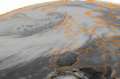 The Braer Storm of January 1993, a notable example of explosive cyclogenesis.
 -
 Satellite image of a Northwest Pacific cyclone on October 24, 2017, showing rapid intensification.


Medical Disclaimer: WikiMD is for informational purposes only and is not a substitute for professional medical advice. Content may be inaccurate or outdated and should not be used for diagnosis or treatment. Always consult your healthcare provider for medical decisions. Verify information with trusted sources such as CDC.gov and NIH.gov. By using this site, you agree that WikiMD is not liable for any outcomes related to its content. See full disclaimer.
Credits:Most images are courtesy of Wikimedia commons, and templates, categories Wikipedia, licensed under CC BY SA or similar.
Translate page: - East Asian
中文,
日本,
한국어,
South Asian
हिन्दी,
தமிழ்,
తెలుగు,
Urdu,
ಕನ್ನಡ,
Southeast Asian
Indonesian,
Vietnamese,
Thai,
မြန်မာဘာသာ,
বাংলা
European
español,
Deutsch,
français,
Greek,
português do Brasil,
polski,
română,
русский,
Nederlands,
norsk,
svenska,
suomi,
Italian
Middle Eastern & African
عربى,
Turkish,
Persian,
Hebrew,
Afrikaans,
isiZulu,
Kiswahili,
Other
Bulgarian,
Hungarian,
Czech,
Swedish,
മലയാളം,
मराठी,
ਪੰਜਾਬੀ,
ગુજરાતી,
Portuguese,
Ukrainian

