Muscle contraction
Overview of muscle contraction
Muscle contraction is a complex physiological process that involves the interaction of various cellular components to produce force and movement. This process is essential for all types of muscles, including skeletal muscle, cardiac muscle, and smooth muscle.
Mechanism of Muscle Contraction[edit]
Muscle contraction occurs through a series of biochemical and mechanical events. The primary mechanism involves the sliding filament theory, which describes how actin and myosin filaments within the muscle fiber slide past each other to generate tension and shorten the muscle.
Sliding Filament Theory[edit]
The sliding filament theory is central to understanding muscle contraction. It involves the following steps:
- Excitation: A nerve impulse reaches the neuromuscular junction, releasing acetylcholine into the synaptic cleft.
- Coupling: Acetylcholine binds to receptors on the muscle cell membrane, leading to depolarization and the release of calcium ions from the sarcoplasmic reticulum.
- Contraction: Calcium ions bind to troponin, causing a conformational change in tropomyosin that exposes binding sites on actin filaments. Myosin heads attach to these sites, forming cross-bridges.
- Power Stroke: The myosin heads pivot, pulling the actin filaments toward the center of the sarcomere, shortening the muscle.
- Detachment: ATP binds to myosin, causing it to release actin and reset for another cycle.
Role of ATP[edit]
Adenosine triphosphate (ATP) is crucial for muscle contraction. It provides the energy required for the power stroke and the detachment of myosin from actin. Without ATP, muscles would remain in a contracted state, a condition known as rigor mortis.
Types of Muscle Contraction[edit]
Muscle contractions can be classified into different types based on the movement and force generated:
- Isotonic Contraction: Muscle changes length while the tension remains constant. It includes:
 * Concentric Contraction: Muscle shortens as it contracts, such as lifting a weight.
 * Eccentric Contraction: Muscle lengthens while maintaining tension, such as lowering a weight.
- Isometric Contraction: Muscle generates force without changing length, such as holding a weight steady.
Regulation of Muscle Contraction[edit]
Muscle contraction is regulated by several factors, including:
- Neural Control: The central nervous system coordinates muscle contraction through motor neurons.
- Hormonal Influence: Hormones like adrenaline can enhance muscle contraction.
- Calcium Ion Concentration: The availability of calcium ions in the muscle cell is a key regulator of contraction.
Clinical Significance[edit]
Understanding muscle contraction is vital for diagnosing and treating various muscular disorders. Conditions such as muscular dystrophy, myasthenia gravis, and muscle cramps involve disruptions in normal muscle contraction processes.
Related Pages[edit]
Muscle_contraction[edit]
-
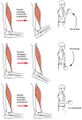 Types of contraction
 -
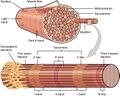 Muscle fibers
 -
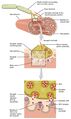 Motor end plate and innervation
 -
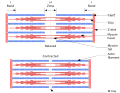 Sarcomere
 -
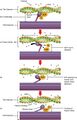 Skeletal muscle contraction
 -
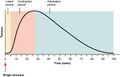 Muscle twitch myogram
 -
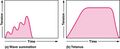 Summation tetanus

.jpg)


Medical Disclaimer: WikiMD is for informational purposes only and is not a substitute for professional medical advice. Content may be inaccurate or outdated and should not be used for diagnosis or treatment. Always consult your healthcare provider for medical decisions. Verify information with trusted sources such as CDC.gov and NIH.gov. By using this site, you agree that WikiMD is not liable for any outcomes related to its content. See full disclaimer.
Credits:Most images are courtesy of Wikimedia commons, and templates, categories Wikipedia, licensed under CC BY SA or similar.
Translate page: - East Asian
中文,
日本,
한국어,
South Asian
हिन्दी,
தமிழ்,
తెలుగు,
Urdu,
ಕನ್ನಡ,
Southeast Asian
Indonesian,
Vietnamese,
Thai,
မြန်မာဘာသာ,
বাংলা
European
español,
Deutsch,
français,
Greek,
português do Brasil,
polski,
română,
русский,
Nederlands,
norsk,
svenska,
suomi,
Italian
Middle Eastern & African
عربى,
Turkish,
Persian,
Hebrew,
Afrikaans,
isiZulu,
Kiswahili,
Other
Bulgarian,
Hungarian,
Czech,
Swedish,
മലയാളം,
मराठी,
ਪੰਜਾਬੀ,
ગુજરાતી,
Portuguese,
Ukrainian

