European Commission
European Commission (EC) is the executive branch of the European Union (EU), responsible for proposing legislation, implementing decisions, upholding the EU treaties and managing the day-to-day business of the EU. The Commission operates as a cabinet government, with 27 members of the Commission (informally known as "commissioners"). There is one member per member state, but members are bound by their oath of office to represent the general interest of the EU as a whole rather than their home state.
History[edit]
The European Commission was established in 1958. It originated from the High Authority of the European Coal and Steel Community (ECSC), which was created in 1952. The ECSC was one of the three foundational organizations that were merged to form the European Union in 1993.
Structure[edit]
The Commission is divided into departments known as Directorates-General (DGs) that can be likened to departments or ministries. Each DG is responsible for a particular policy area and is headed by a Commissioner. The President of the European Commission is the head of the Commission and sets its policy agenda.
Role and Functions[edit]
The European Commission has four main roles: to propose legislation to the European Parliament and the Council of the European Union; to administer and implement Community policies; to enforce European law; and to negotiate international agreements, mainly those relating to trade and cooperation.
Criticism and Controversies[edit]
The European Commission has been the subject of criticism and controversies over the years. These have ranged from allegations of corruption and fraud to criticisms about the lack of transparency and democratic legitimacy.
See Also[edit]
- European Union
- European Parliament
- Council of the European Union
- President of the European Commission
 | This article about the European Union is a stub. You can help WikiMD by expanding the page. |
-
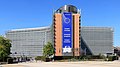 European Commission
 -
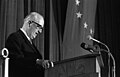 Robert Schuman Prize awarded to Walter Hallstein
 -
 Meeting with EU Commissioner Delors
 -
 Ursula von der Leyen presents her vision to MEPs
 -
 European Commission Room (Open Day)
 -
 Androulla Vassiliou
 -
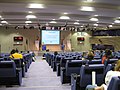 Berlaymont Press Room


_2019.07.16._Ursula_von_der_Leyen_presents_her_vision_to_MEPs_2_(cropped).jpg)
_1.jpg)


Medical Disclaimer: WikiMD is for informational purposes only and is not a substitute for professional medical advice. Content may be inaccurate or outdated and should not be used for diagnosis or treatment. Always consult your healthcare provider for medical decisions. Verify information with trusted sources such as CDC.gov and NIH.gov. By using this site, you agree that WikiMD is not liable for any outcomes related to its content. See full disclaimer.
Credits:Most images are courtesy of Wikimedia commons, and templates, categories Wikipedia, licensed under CC BY SA or similar.
Translate this page: - East Asian
中文,
日本,
한국어,
South Asian
हिन्दी,
தமிழ்,
తెలుగు,
Urdu,
ಕನ್ನಡ,
Southeast Asian
Indonesian,
Vietnamese,
Thai,
မြန်မာဘာသာ,
বাংলা
European
español,
Deutsch,
français,
Greek,
português do Brasil,
polski,
română,
русский,
Nederlands,
norsk,
svenska,
suomi,
Italian
Middle Eastern & African
عربى,
Turkish,
Persian,
Hebrew,
Afrikaans,
isiZulu,
Kiswahili,
Other
Bulgarian,
Hungarian,
Czech,
Swedish,
മലയാളം,
मराठी,
ਪੰਜਾਬੀ,
ગુજરાતી,
Portuguese,
Ukrainian
