Epitope mapping
Epitope mapping is a biochemical technique used in the field of immunology to identify the antibody recognition site, or 'epitope', on an antigen. This process is crucial in the development of vaccines, therapeutic antibodies, and diagnostic tools.
Overview[edit]
An epitope, also known as an antigenic determinant, is the part of an antigen that is recognized by the immune system, specifically by antibodies, B cells, or T cells. The process of identifying these epitopes is known as epitope mapping. This technique is used to identify the binding sites of antibodies on their target antigens, and it is a critical step in the design of vaccines and therapeutic antibodies.
Techniques[edit]
Several techniques are used in epitope mapping, including X-ray crystallography, nuclear magnetic resonance (NMR), mass spectrometry, and peptide scanning. Each of these techniques has its own advantages and limitations, and the choice of method depends on the specific requirements of the study.
X-ray Crystallography[edit]
X-ray crystallography is a technique used to determine the atomic and molecular structure of a crystal. In the context of epitope mapping, it can provide detailed information about the three-dimensional structure of the antigen-antibody complex.
Nuclear Magnetic Resonance[edit]
Nuclear magnetic resonance (NMR) is another technique used in epitope mapping. It provides information about the structure of the antigen-antibody complex in solution, which can be useful in cases where the complex cannot be crystallized for X-ray crystallography.
Mass Spectrometry[edit]
Mass spectrometry is a technique that measures the mass-to-charge ratio of ions. It can be used in epitope mapping to identify the specific amino acids in the antigen that interact with the antibody.
Peptide Scanning[edit]
Peptide scanning is a technique that involves synthesizing a series of overlapping peptides from the antigen sequence. These peptides are then tested for their ability to bind to the antibody, allowing the identification of the epitope.
Applications[edit]
Epitope mapping has a wide range of applications in the field of biomedicine. It is used in the development of vaccines, where it can help to design antigens that elicit a strong immune response. It is also used in the development of therapeutic antibodies, where it can help to design antibodies that bind to their target antigens with high specificity and affinity. In addition, it is used in the development of diagnostic tools, where it can help to design tests that accurately detect the presence of specific antigens.
.svg) | This biochemistry article is a stub. You can help WikiMD by expanding the page. |
 | This immunology article is a stub. You can help WikiMD by expanding the page. |
Epitope_mapping[edit]
-
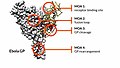 Epitope mapping mechanism of action
 -
 Epitope mapping illustration


Medical Disclaimer: WikiMD is for informational purposes only and is not a substitute for professional medical advice. Content may be inaccurate or outdated and should not be used for diagnosis or treatment. Always consult your healthcare provider for medical decisions. Verify information with trusted sources such as CDC.gov and NIH.gov. By using this site, you agree that WikiMD is not liable for any outcomes related to its content. See full disclaimer.
Credits:Most images are courtesy of Wikimedia commons, and templates, categories Wikipedia, licensed under CC BY SA or similar.
Translate page: - East Asian
中文,
日本,
한국어,
South Asian
हिन्दी,
தமிழ்,
తెలుగు,
Urdu,
ಕನ್ನಡ,
Southeast Asian
Indonesian,
Vietnamese,
Thai,
မြန်မာဘာသာ,
বাংলা
European
español,
Deutsch,
français,
Greek,
português do Brasil,
polski,
română,
русский,
Nederlands,
norsk,
svenska,
suomi,
Italian
Middle Eastern & African
عربى,
Turkish,
Persian,
Hebrew,
Afrikaans,
isiZulu,
Kiswahili,
Other
Bulgarian,
Hungarian,
Czech,
Swedish,
മലയാളം,
मराठी,
ਪੰਜਾਬੀ,
ગુજરાતી,
Portuguese,
Ukrainian

