Epiglottis
The Epiglottis is a leaf-shaped flap in the throat that is located at the base of the tongue. It plays a crucial role in the respiratory system by preventing food and drink from entering the windpipe during swallowing.
Structure[edit]
The epiglottis is made of elastic cartilage. It is attached to the entrance of the larynx and is covered with a mucous membrane. This membrane is mostly lined with stratified squamous epithelium which is designed to handle the wear and tear of passing food and drink.
Function[edit]
The primary function of the epiglottis is to seal off the windpipe during eating, so that food is not accidentally inhaled. The epiglottis flips downward to cover the entrance of the larynx, which leads to the lungs. When the swallowing reflex is triggered, the upward movement of the larynx causes the epiglottis to close over the trachea. This prevents aspiration of food or liquid which could result in choking or pneumonia.
Clinical significance[edit]
Inflammation of the epiglottis is known as epiglottitis. This is usually caused by bacterial infection and can cause serious, potentially life-threatening complications if not treated promptly. Symptoms of epiglottitis include severe sore throat, difficulty swallowing, and changes in the voice.
See also[edit]
References[edit]

This WikiMD article can only be edited by registered and verified editors. You can log in or register.
-
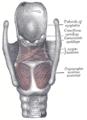 Epiglottis
 -
 Epiglottis
 -
 High rising epiglottis
 -
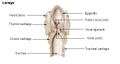 Illustration of the larynx
 -
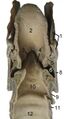 Horse larynx (Kehlkopf Pferd)
 -
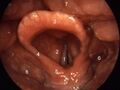 Normal larynx


Medical Disclaimer: WikiMD is for informational purposes only and is not a substitute for professional medical advice. Content may be inaccurate or outdated and should not be used for diagnosis or treatment. Always consult your healthcare provider for medical decisions. Verify information with trusted sources such as CDC.gov and NIH.gov. By using this site, you agree that WikiMD is not liable for any outcomes related to its content. See full disclaimer.
Credits:Most images are courtesy of Wikimedia commons, and templates, categories Wikipedia, licensed under CC BY SA or similar.
Translate page: - East Asian
中文,
日本,
한국어,
South Asian
हिन्दी,
தமிழ்,
తెలుగు,
Urdu,
ಕನ್ನಡ,
Southeast Asian
Indonesian,
Vietnamese,
Thai,
မြန်မာဘာသာ,
বাংলা
European
español,
Deutsch,
français,
Greek,
português do Brasil,
polski,
română,
русский,
Nederlands,
norsk,
svenska,
suomi,
Italian
Middle Eastern & African
عربى,
Turkish,
Persian,
Hebrew,
Afrikaans,
isiZulu,
Kiswahili,
Other
Bulgarian,
Hungarian,
Czech,
Swedish,
മലയാളം,
मराठी,
ਪੰਜਾਬੀ,
ગુજરાતી,
Portuguese,
Ukrainian

