Epidemiology of motor vehicle collisions
Epidemiology of Motor Vehicle Collisions
The epidemiology of motor vehicle collisions refers to the study and analysis of the patterns, causes, and effects of traffic collisions on human populations. Motor vehicle collisions are a significant public health issue globally, leading to both fatalities and non-fatal injuries. This article explores the key aspects of the epidemiology of these incidents, including statistical trends, risk factors, and preventive measures.
Overview[edit]
Motor vehicle collisions involve vehicles such as cars, trucks, motorcycles, bicycles, and pedestrians. These incidents can result in a range of outcomes, from minor injuries to fatalities. The World Health Organization (WHO) has identified road traffic injuries as a major public health problem, which requires concerted efforts for effective prevention.
Statistical Trends[edit]
Globally, it is estimated that approximately 1.35 million people die each year as a result of road traffic crashes, according to the WHO. The majority of these fatalities occur in low- and middle-income countries. Additionally, road traffic injuries are the leading cause of death for children and young adults aged 5-29 years. The economic implications of road traffic collisions are also significant, costing countries approximately 3% of their gross domestic product (GDP).
Risk Factors[edit]
Several factors contribute to the risk of motor vehicle collisions. These include:
- Driver Behavior: Speeding, driving under the influence of alcohol or drugs, distracted driving, and aggressive driving behaviors significantly increase the risk of collisions.
- Road Conditions: Poorly maintained roads, inadequate signage, and lack of pedestrian crossings can contribute to road traffic incidents.
- Vehicle Safety: The lack of safety features in vehicles, such as seat belts, airbags, and anti-lock braking systems, increases the risk of severe injury in the event of a collision.
- Environmental Factors: Weather conditions, such as rain, snow, and fog, can impair visibility and road traction, leading to increased accident risk.
Preventive Measures[edit]
Efforts to reduce the incidence and impact of motor vehicle collisions focus on several key areas:
- Legislation and Enforcement: Implementing and enforcing laws related to speed limits, alcohol consumption, seat belt use, and distracted driving can significantly reduce traffic injuries and fatalities.
- Road Safety Improvements: Enhancing road infrastructure, including better road design, improved lighting, and the installation of safety barriers, can help prevent collisions.
- Vehicle Safety Standards: Promoting the adoption of advanced safety technologies in vehicles, such as electronic stability control and automatic emergency braking, can reduce the severity of crashes.
- Public Awareness Campaigns: Educating the public about the risks associated with unsafe driving behaviors and promoting safe driving practices are crucial for reducing road traffic injuries.
Conclusion[edit]
The epidemiology of motor vehicle collisions highlights the complex interplay of factors contributing to road traffic injuries and fatalities. Addressing this public health challenge requires a multifaceted approach, involving legislation, infrastructure improvements, vehicle safety enhancements, and public education. Through concerted efforts, it is possible to significantly reduce the burden of road traffic collisions on societies worldwide.

-
 Global road traffic accident deaths (WHO 2012)
 -
 Traffic-related deaths per vehicle-km
 -
 US traffic deaths per VMT, VMT, per capita, and total annual deaths
 -
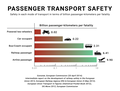 Roadway vs. railway safety


Ad. Transform your life with W8MD's
GLP-1 weight loss injections special from $29.99 with insurance
|
WikiMD Medical Encyclopedia |
Medical Disclaimer: WikiMD is for informational purposes only and is not a substitute for professional medical advice. Content may be inaccurate or outdated and should not be used for diagnosis or treatment. Always consult your healthcare provider for medical decisions. Verify information with trusted sources such as CDC.gov and NIH.gov. By using this site, you agree that WikiMD is not liable for any outcomes related to its content. See full disclaimer.
Credits:Most images are courtesy of Wikimedia commons, and templates, categories Wikipedia, licensed under CC BY SA or similar.
Translate this page: - East Asian
中文,
日本,
한국어,
South Asian
हिन्दी,
தமிழ்,
తెలుగు,
Urdu,
ಕನ್ನಡ,
Southeast Asian
Indonesian,
Vietnamese,
Thai,
မြန်မာဘာသာ,
বাংলা
European
español,
Deutsch,
français,
Greek,
português do Brasil,
polski,
română,
русский,
Nederlands,
norsk,
svenska,
suomi,
Italian
Middle Eastern & African
عربى,
Turkish,
Persian,
Hebrew,
Afrikaans,
isiZulu,
Kiswahili,
Other
Bulgarian,
Hungarian,
Czech,
Swedish,
മലയാളം,
मराठी,
ਪੰਜਾਬੀ,
ગુજરાતી,
Portuguese,
Ukrainian
