Emergency medical services in the United States
Emergency Medical Services in the United States (EMS) encompasses a comprehensive system designed to provide services to patients who require immediate medical attention due to acute illness or injury. The EMS system in the United States is a coordinated effort that involves multiple components, including but not limited to, emergency medical dispatch, pre-hospital care, transport to healthcare facilities, and hospital-based emergency care.
Overview[edit]
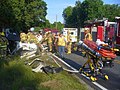
Emergency Medical Services (EMS) in the United States are a critical component of the healthcare system, providing rapid response and medical care to individuals in need of urgent medical attention. The primary goal of EMS is to deliver emergency medical care to patients outside of the hospital setting, often at the scene of an accident or in the patient's home, and to transport patients to hospital emergency departments if further treatment is required.
History[edit]
The concept of organized emergency medical services in the United States dates back to the Civil War, where ambulance services were used to transport injured soldiers. However, the modern EMS system began to take shape in the 1960s, following the publication of the National Academy of Sciences report "Accidental Death and Disability: The Neglected Disease of Modern Society," which highlighted the need for improved emergency medical care.
Components[edit]
The EMS system in the United States is composed of several key components:
- Emergency Medical Dispatch (EMD): The first point of contact for individuals seeking emergency medical assistance. Dispatchers are trained to assess the situation and prioritize calls based on the severity of the patient's condition.
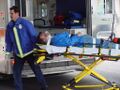
- Pre-Hospital Care: Provided by emergency medical technicians (EMTs) and paramedics who are trained to perform a variety of medical procedures, including CPR, administration of certain medications, and advanced airway management.
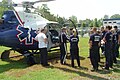
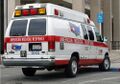
- Transportation: Ambulances and, in some cases, air transport services are used to transport patients to healthcare facilities. The choice of transport is based on the patient's condition and the distance to the nearest appropriate facility.
- Hospital-Based Emergency Care: Upon arrival at the hospital, patients are treated by emergency medicine physicians and other healthcare professionals who specialize in acute care.
Regulation and Oversight[edit]
The regulation and oversight of EMS in the United States are primarily the responsibility of state governments, with federal agencies providing guidelines and funding. Each state has its own EMS authority that is responsible for licensing EMTs and paramedics, certifying EMS training programs, and establishing standards for emergency medical services.
Challenges and Future Directions[edit]
The EMS system in the United States faces several challenges, including funding constraints, workforce shortages, and the need for integration with other components of the healthcare system. Future directions for EMS include the adoption of new technologies, such as telemedicine, to improve patient care and the implementation of community paramedicine programs to address healthcare disparities.
See Also[edit]
 | This medical article is a stub. You can help WikiMD by expanding the page. |
-
 Emergency medical services in the United States
 -
 Emergency medical services in the United States
 -
 Emergency medical services in the United States
 -
 Emergency medical services in the United States
 -
 Emergency medical services in the United States
 -
 Emergency medical services in the United States
 -
 Emergency medical services in the United States
 -
 Emergency medical services in the United States
 -
 Emergency medical services in the United States
 -
 Emergency medical services in the United States
 -
 Emergency medical services in the United States
 -
 Emergency medical services in the United States


Medical Disclaimer: WikiMD is for informational purposes only and is not a substitute for professional medical advice. Content may be inaccurate or outdated and should not be used for diagnosis or treatment. Always consult your healthcare provider for medical decisions. Verify information with trusted sources such as CDC.gov and NIH.gov. By using this site, you agree that WikiMD is not liable for any outcomes related to its content. See full disclaimer.
Credits:Most images are courtesy of Wikimedia commons, and templates, categories Wikipedia, licensed under CC BY SA or similar.
Translate page: - East Asian
中文,
日本,
한국어,
South Asian
हिन्दी,
தமிழ்,
తెలుగు,
Urdu,
ಕನ್ನಡ,
Southeast Asian
Indonesian,
Vietnamese,
Thai,
မြန်မာဘာသာ,
বাংলা
European
español,
Deutsch,
français,
Greek,
português do Brasil,
polski,
română,
русский,
Nederlands,
norsk,
svenska,
suomi,
Italian
Middle Eastern & African
عربى,
Turkish,
Persian,
Hebrew,
Afrikaans,
isiZulu,
Kiswahili,
Other
Bulgarian,
Hungarian,
Czech,
Swedish,
മലയാളം,
मराठी,
ਪੰਜਾਬੀ,
ગુજરાતી,
Portuguese,
Ukrainian

