Emergency medical services in the United Kingdom
Emergency Medical Services in the United Kingdom (EMS in the UK) encompass a range of emergency care services that provide pre-hospital treatment and transport to patients in need of urgent medical care. The system is designed to respond to medical emergencies, accidents, and traumatic incidents, ensuring rapid access to healthcare services for all individuals across the United Kingdom. This article provides an overview of the structure, components, and operation of the EMS in the UK.
Overview[edit]
Emergency Medical Services in the United Kingdom are a critical component of the healthcare system, offering immediate care and transportation for those in urgent need. The service is available 24 hours a day, providing life-saving interventions and ensuring patients are transported safely to healthcare facilities for further treatment. The EMS system in the UK is known for its efficiency, comprehensive coverage, and high standards of care.
Components[edit]
The UK's EMS system comprises several key components, including:
- Ambulance Services: Operated by the National Health Service (NHS) trusts, ambulance services are the backbone of the EMS in the UK. They provide emergency response, patient transport services, and are equipped with advanced life support (ALS) capabilities.
- Paramedics: Highly trained healthcare professionals who provide advanced medical care at the scene of an emergency. They are skilled in a range of procedures, including airway management, administration of emergency medications, and cardiac life support.
- Emergency Operations Centres (EOCs): Facilities where emergency calls are received and dispatched. EOCs use sophisticated systems to prioritize calls based on urgency and allocate resources efficiently.
- Air Ambulances: Helicopters and fixed-wing aircraft that provide rapid transport for critically ill or injured patients over long distances or difficult terrain. They are equipped with specialized medical equipment and staffed by paramedics and doctors.
- Community First Responders (CFRs): Volunteers trained to provide immediate care in their local communities while an ambulance is en route. They can perform basic life support and use automated external defibrillators (AEDs).
Operation[edit]
The operation of EMS in the UK is characterized by a tiered response system, ensuring that the most appropriate resources are dispatched to each emergency. Calls to the emergency number (999 or 112) are triaged by trained call handlers in the EOCs, who determine the level of response required. Ambulances, rapid response vehicles, air ambulances, or community first responders may be dispatched based on the nature and severity of the incident.
Training and Education[edit]
Paramedics and other EMS personnel in the UK undergo rigorous training and education. Paramedic training typically involves a university degree in paramedic science, followed by practical experience in ambulance services. Continuous professional development is required to maintain registration with the Health and Care Professions Council (HCPC).
Challenges and Developments[edit]
The EMS in the UK faces several challenges, including increasing demand, resource constraints, and the need for continuous improvement in care quality. Innovations in technology, telemedicine, and integrated care models are being explored to address these challenges and enhance the efficiency and effectiveness of emergency medical services.
Conclusion[edit]
Emergency Medical Services in the United Kingdom play a vital role in the healthcare system, providing rapid, life-saving care to those in need. Through the dedication of paramedics, ambulance staff, and other EMS personnel, the service continues to evolve and adapt to meet the changing needs of the population.
 | This medical article is a stub. You can help WikiMD by expanding the page. |
-
 Emergency medical services in the United Kingdom
 -
 Emergency medical services in the United Kingdom
 -
 Emergency medical services in the United Kingdom
 -
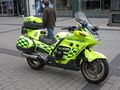 Emergency medical services in the United Kingdom
 -
 Emergency medical services in the United Kingdom
 -
 Emergency medical services in the United Kingdom
 -
 Emergency medical services in the United Kingdom
 -
 Emergency medical services in the United Kingdom
.jpg)


Sponsored Health Resource

W8MD Weight Loss, Sleep & MedSpa
Looking for physician-supervised weight loss, semaglutide, tirzepatide, or GLP-1 receptor agonist options? W8MD helps eligible patients in New York City, Brooklyn, New Jersey, Connecticut, Pennsylvania, Delaware, and greater Philadelphia with medical weight loss, sleep medicine, and long-term maintenance support.
GLP-1 specials: Affordable GLP-1 injections NYC and Philadelphia starting from $29.99/week and up for semaglutide with insurance accepted for qualifying visits, and $45/week and up for tirzepatide with insurance accepted for qualifying visits. Self-pay options start from $59.99/week and up for semaglutide and $69.99/week and up for tirzepatide.
Medical weight loss NYC | Affordable GLP-1 injections NYC | Budget GLP-1 weight loss shots Philadelphia | New Jersey medical weight loss | NYC medical weight loss | Philadelphia medical weight loss | Sleep clinic NYC | W8MD's Philadelphia GLP-1 doctor | Weight loss prescriptions NYC
Book a W8MD appointment · View GLP-1 specials
Paid promotional message. Eligibility, pricing, insurance coverage, medication availability, and results vary. Medical evaluation required.

Medical Disclaimer: WikiMD is for informational purposes only and is not a substitute for professional medical advice. Content may be inaccurate or outdated and should not be used for diagnosis or treatment. Always consult your healthcare provider for medical decisions. Verify information with trusted sources such as CDC.gov and NIH.gov. By using this site, you agree that WikiMD is not liable for any outcomes related to its content. See full disclaimer.
Credits:Most images are courtesy of Wikimedia commons, and templates, categories Wikipedia, licensed under CC BY SA or similar.
Translate page: - East Asian
中文,
日本,
한국어,
South Asian
हिन्दी,
தமிழ்,
తెలుగు,
Urdu,
ಕನ್ನಡ,
Southeast Asian
Indonesian,
Vietnamese,
Thai,
မြန်မာဘာသာ,
বাংলা
European
español,
Deutsch,
français,
Greek,
português do Brasil,
polski,
română,
русский,
Nederlands,
norsk,
svenska,
suomi,
Italian
Middle Eastern & African
عربى,
Turkish,
Persian,
Hebrew,
Afrikaans,
isiZulu,
Kiswahili,
Other
Bulgarian,
Hungarian,
Czech,
Swedish,
മലയാളം,
मराठी,
ਪੰਜਾਬੀ,
ગુજરાતી,
Portuguese,
Ukrainian

