Elsimar M. Coutinho
Elsimar Metzker Coutinho (May 18, 1930 – August 17, 2020) was a Brazilian scientist, professor, and gynecologist known for his significant contributions to the field of reproductive health and contraception. His work has had a profound impact on the development of hormonal methods of contraception and the understanding of the menstrual cycle.
Early Life and Education[edit]
Elsimar Coutinho was born in Salvador, Bahia, Brazil. He pursued his medical degree at the Federal University of Bahia, graduating in 1953. Following his graduation, Coutinho moved to the United States to further his studies, where he earned a Ph.D. in human reproduction under the guidance of renowned experts at the Harvard University.
Career[edit]
Coutinho's career was marked by his pioneering research in the field of reproductive health. He held several academic positions, including professorships at the Federal University of Bahia and the University of São Paulo. Coutinho's research focused on the hormonal regulation of the menstrual cycle and the development of contraceptive methods. He was instrumental in the development of the contraceptive injection, a method that has provided women worldwide with a long-term contraception option.
Throughout his career, Coutinho advocated for the non-necessity of menstruation for health, a view that challenged traditional beliefs and contributed to the development of continuous-use oral contraceptives. His work has been crucial in empowering women to have more control over their reproductive health.
Contributions to Contraception[edit]
Coutinho's research led to significant advancements in contraceptive technology. He was a key figure in the development of the contraceptive implant and the hormonal intrauterine device (IUD), both of which are widely used today. His work on understanding the hormonal control of fertility has paved the way for the development of new contraceptive methods that are safer, more effective, and more convenient.
Controversies[edit]
Despite his contributions, Coutinho's views on menstruation and contraception have sparked debate and controversy. His stance on the non-necessity of menstruation for health has been met with criticism from some quarters of the medical community. However, his research has opened up new avenues for discussion and has challenged the medical community to rethink reproductive health.
Legacy[edit]
Elsimar Coutinho's work has left an indelible mark on the field of reproductive health. His research has not only advanced scientific understanding but has also had a tangible impact on the lives of women around the world. Coutinho passed away on August 17, 2020, but his legacy lives on through his contributions to science and medicine.
See Also[edit]
 | This biographical article is a stub. You can help WikiMD by expanding the page. |
Elsimar M. Coutinho[edit]
-
 Dr. Elsimar Coutinho
 -
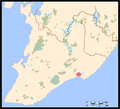 Salvador, Itapuã
 -
 Illustration from 1907


Medical Disclaimer: WikiMD is for informational purposes only and is not a substitute for professional medical advice. Content may be inaccurate or outdated and should not be used for diagnosis or treatment. Always consult your healthcare provider for medical decisions. Verify information with trusted sources such as CDC.gov and NIH.gov. By using this site, you agree that WikiMD is not liable for any outcomes related to its content. See full disclaimer.
Credits:Most images are courtesy of Wikimedia commons, and templates, categories Wikipedia, licensed under CC BY SA or similar.
Translate page: - East Asian
中文,
日本,
한국어,
South Asian
हिन्दी,
தமிழ்,
తెలుగు,
Urdu,
ಕನ್ನಡ,
Southeast Asian
Indonesian,
Vietnamese,
Thai,
မြန်မာဘာသာ,
বাংলা
European
español,
Deutsch,
français,
Greek,
português do Brasil,
polski,
română,
русский,
Nederlands,
norsk,
svenska,
suomi,
Italian
Middle Eastern & African
عربى,
Turkish,
Persian,
Hebrew,
Afrikaans,
isiZulu,
Kiswahili,
Other
Bulgarian,
Hungarian,
Czech,
Swedish,
മലയാളം,
मराठी,
ਪੰਜਾਬੀ,
ગુજરાતી,
Portuguese,
Ukrainian

