Insects as food
Insects as food, also known as entomophagy, refers to the practice of consuming insects by humans. The practice has been observed in many cultures across the globe, particularly in Africa, Asia, and Latin America. However, in some societies, insect eating is uncommon or even taboo.
History[edit]
The consumption of insects dates back to prehistoric times. Evidence of prehistoric entomophagy comes from archaeological sites, where insects were found in coprolites from caves in the USA and Mexico. In ancient times, several cultures did not differentiate insects from other land animals. They considered them a single group and often used the same term for both.
Nutritional Value[edit]
Insects are high in protein, healthy fats, and other nutrients. They are also a good source of vitamins and minerals. Some insects, such as crickets, are particularly high in protein and can be a sustainable alternative to traditional livestock.
Cultural Aspects[edit]
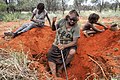
In many cultures, insects are not just survival food but are considered a delicacy. Some societies in Africa and Asia have been practicing entomophagy for centuries, where insects are part of their traditional food culture.
Environmental Impact[edit]
Insect farming has a much lower environmental impact than traditional livestock farming. Insects require less land, water, and food, and they produce fewer greenhouse gases.
Insect Farming[edit]
Insect farming, also known as mini-livestock farming, is the practice of raising insects for food. It is a growing industry, particularly in countries where insects are traditionally consumed.
Edible Insects[edit]
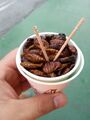
There are nearly 2,000 known species of insects that are edible. The most commonly eaten insects include beetles, caterpillars, bees, wasps, ants, grasshoppers, locusts, and crickets.
Preparation and Cooking[edit]
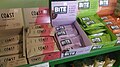
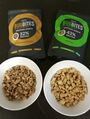
Insects can be prepared and cooked in a variety of ways. They can be roasted, fried, boiled, or ground into a powder and used in baking or for protein bars.
See Also[edit]

-
 Insects as food
 -
 Insects as food
 -
 Insects as food
 -
 Insects as food
 -
 Insects as food
 -
 Insects as food
 -
 Insects as food
 -
 Insects as food
 -
 Insects as food
 -
 Insects as food
 -
 Insects as food


.jpg)


Medical Disclaimer: WikiMD is for informational purposes only and is not a substitute for professional medical advice. Content may be inaccurate or outdated and should not be used for diagnosis or treatment. Always consult your healthcare provider for medical decisions. Verify information with trusted sources such as CDC.gov and NIH.gov. By using this site, you agree that WikiMD is not liable for any outcomes related to its content. See full disclaimer.
Credits:Most images are courtesy of Wikimedia commons, and templates, categories Wikipedia, licensed under CC BY SA or similar.
Translate page: - East Asian
中文,
日本,
한국어,
South Asian
हिन्दी,
தமிழ்,
తెలుగు,
Urdu,
ಕನ್ನಡ,
Southeast Asian
Indonesian,
Vietnamese,
Thai,
မြန်မာဘာသာ,
বাংলা
European
español,
Deutsch,
français,
Greek,
português do Brasil,
polski,
română,
русский,
Nederlands,
norsk,
svenska,
suomi,
Italian
Middle Eastern & African
عربى,
Turkish,
Persian,
Hebrew,
Afrikaans,
isiZulu,
Kiswahili,
Other
Bulgarian,
Hungarian,
Czech,
Swedish,
മലയാളം,
मराठी,
ਪੰਜਾਬੀ,
ગુજરાતી,
Portuguese,
Ukrainian

