Ecological extinction
Ecological extinction is a significant form of extinction where a species declines to such low abundance that, although it is still present in the community, it no longer interacts significantly with other species. Ecological extinction stands in contrast to local extinction, where a species is no longer found in an area it once inhabited but still exists elsewhere in the world, and global extinction, where a species is no longer found anywhere on Earth. The concept of ecological extinction emphasizes the role of species as functional components in ecosystems, highlighting that the loss of ecological functions can precede the complete loss of the species itself.
Overview[edit]
Ecological extinction occurs when a species becomes so rare that it can no longer play its ecological roles in the biological communities where it is a member. This can lead to significant changes in the structure and function of ecosystems, affecting biodiversity, nutrient cycling, and ecosystem services. Species that are ecologically extinct are often referred to as "living dead" or "functionally extinct" because, despite their physical presence, their ecological roles have been lost.
Causes[edit]
The primary causes of ecological extinction are similar to those driving biodiversity loss in general, including habitat destruction, climate change, overexploitation, pollution, and the introduction of invasive species. These factors can reduce population sizes to levels where species cannot maintain their ecological roles. For example, overfishing can lead to the ecological extinction of key predator species, altering food web dynamics and leading to cascading effects throughout the ecosystem.
Consequences[edit]
The consequences of ecological extinction are profound, as species interactions are fundamental to ecosystem functioning. The loss of key species can lead to a breakdown in food webs, loss of biodiversity, changes in habitat structure, and alterations in nutrient cycling processes. These changes can compromise the resilience of ecosystems, reducing their ability to withstand and recover from environmental stresses.
Conservation Implications[edit]
Understanding and preventing ecological extinction is a critical goal for conservation biology. Conservation strategies that focus solely on preventing species from becoming globally extinct may overlook the importance of maintaining ecological functions. Therefore, conservation efforts must aim to preserve not only species but also the ecological roles they play, ensuring the maintenance of biodiversity and ecosystem services.
Examples[edit]
One well-documented example of ecological extinction is the overhunting of sea otters (Enhydra lutris), which led to their ecological extinction in parts of their range. Sea otters play a crucial role in maintaining the health of kelp forest ecosystems by preying on sea urchins, which can otherwise overgraze kelp forests. The reduction in sea otter populations led to unchecked sea urchin populations and the decline of kelp forests, demonstrating the cascading effects of ecological extinction.
See Also[edit]

This WikiMD article can only be edited by registered and verified editors. You can log in or register.
-
 Red thorny starfish in Zanzibar, Tanzania
 -
 Sea otter
 -
 Argentine ant
 -
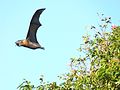 Flying bat with tree
,_Zanz%C3%ADbar,_Tanzania,_2024-06-01,_DD_06.jpg)


Advertise on WikiMD — 81,000+ full articles, ~900,000 total pages, ~250 million page views. Global reach, limited time promotional rates from $1/page/day. Learn more · View stats

Translate page: - East Asian
中文,
日本,
한국어,
South Asian
हिन्दी,
தமிழ்,
తెలుగు,
Urdu,
ಕನ್ನಡ,
Southeast Asian
Indonesian,
Vietnamese,
Thai,
မြန်မာဘာသာ,
বাংলা
European
español,
Deutsch,
français,
Greek,
português do Brasil,
polski,
română,
русский,
Nederlands,
norsk,
svenska,
suomi,
Italian
Middle Eastern & African
عربى,
Turkish,
Persian,
Hebrew,
Afrikaans,
isiZulu,
Kiswahili,
Other
Bulgarian,
Hungarian,
Czech,
Swedish,
മലയാളം,
मराठी,
ਪੰਜਾਬੀ,
ગુજરાતી,
Portuguese,
Ukrainian
About WikiMD • Contact • Disclaimer • Privacy • Copyright • Site statistics
Some content and images may originate from Wikimedia Commons or Wikipedia and remain subject to their stated licenses. Unless otherwise noted, eligible WikiMD content is available under CC BY-SA 4.0.
WikiMD Wellnesspedia — Free health & wellness information for patients, students, and health professionals.

