Echinococcus
Echinococcus is a genus of small tapeworms that can cause a disease known as echinococcosis in humans. This disease is characterized by the formation of cysts in various organs of the body, most commonly the liver and lungs.
Overview[edit]
Echinococcus is a genus of tapeworm that belongs to the family Taeniidae. There are four species of Echinococcus that can cause disease in humans: E. granulosus, E. multilocularis, E. vogeli, and E. oligarthrus. These species have a complex life cycle involving two hosts. The adult worms live in the intestines of carnivores, such as dogs or foxes, and the larvae form cysts in various organs of intermediate hosts, such as sheep, cattle, or humans.
Life Cycle[edit]
The life cycle of Echinococcus involves two hosts. The adult worms live in the intestines of the definitive host, where they produce eggs that are passed in the feces. The eggs are ingested by an intermediate host, such as a sheep or a human, and hatch in the intestine to release oncospheres. The oncospheres penetrate the intestinal wall and are carried by the bloodstream to various organs, where they develop into cysts.
Disease[edit]
In humans, infection with Echinococcus can cause a disease known as echinococcosis. This disease is characterized by the formation of cysts in various organs of the body, most commonly the liver and lungs. The cysts can cause various symptoms, depending on their size and location. In some cases, the cysts can rupture and cause severe complications, such as anaphylactic shock.
Diagnosis and Treatment[edit]
Diagnosis of echinococcosis is usually based on imaging studies, such as ultrasound or CT scan, and serological tests. Treatment typically involves surgery to remove the cysts, along with antiparasitic drugs to kill the larvae.
Prevention[edit]
Prevention of echinococcosis involves measures to interrupt the life cycle of the parasite, such as deworming of dogs and proper disposal of animal feces.

This WikiMD article can only be edited by registered and verified editors. You can log in or register.
-
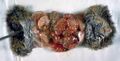 Cotton rat infected with Echinococcus multilocularis
 -
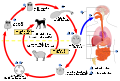 Echinococcus Life Cycle
 -
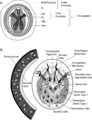 International consensus on terminology


Medical Disclaimer: WikiMD is for informational purposes only and is not a substitute for professional medical advice. Content may be inaccurate or outdated and should not be used for diagnosis or treatment. Always consult your healthcare provider for medical decisions. Verify information with trusted sources such as CDC.gov and NIH.gov. By using this site, you agree that WikiMD is not liable for any outcomes related to its content. See full disclaimer.
Credits:Most images are courtesy of Wikimedia commons, and templates, categories Wikipedia, licensed under CC BY SA or similar.
Translate page: - East Asian
中文,
日本,
한국어,
South Asian
हिन्दी,
தமிழ்,
తెలుగు,
Urdu,
ಕನ್ನಡ,
Southeast Asian
Indonesian,
Vietnamese,
Thai,
မြန်မာဘာသာ,
বাংলা
European
español,
Deutsch,
français,
Greek,
português do Brasil,
polski,
română,
русский,
Nederlands,
norsk,
svenska,
suomi,
Italian
Middle Eastern & African
عربى,
Turkish,
Persian,
Hebrew,
Afrikaans,
isiZulu,
Kiswahili,
Other
Bulgarian,
Hungarian,
Czech,
Swedish,
മലയാളം,
मराठी,
ਪੰਜਾਬੀ,
ગુજરાતી,
Portuguese,
Ukrainian

