Surface-supplied diving
Surface-supplied diving is a diving method where the diver is supplied with breathing gas from the surface, rather than carrying a supply with them in the form of a scuba set. This method of diving is used in professional diving due to the greater safety and practical advantages it provides.
History[edit]
The history of surface-supplied diving dates back to the 19th century when the first practical diving helmets were introduced. These early systems used air pumps to supply the diver with oxygen, a method that is still used today in modern surface-supplied diving systems.
Equipment[edit]
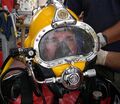
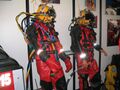
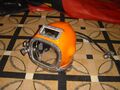
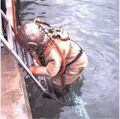
The main equipment used in surface-supplied diving includes the diving helmet, diving suit, umbilical, diving stage, and diving bell. The diving helmet is connected to the surface supply of breathing gas via the umbilical, which also includes a lifeline and a communication line. The diving stage is used to lower and raise the diver to and from the dive site, while the diving bell serves as a base or shelter for the diver during the dive.
Safety[edit]
Safety is a major concern in surface-supplied diving. The use of a surface supply of breathing gas reduces the risk of running out of air, as can happen with scuba diving. The umbilical provides a physical connection to the surface, which can be used to rescue the diver in case of an emergency. The communication line allows for constant contact between the diver and the surface team, enabling immediate response to any problems.
Training[edit]
Training for surface-supplied diving is rigorous and comprehensive. It includes both theoretical and practical components, covering topics such as equipment operation, emergency procedures, and diving physics. Training is typically provided by professional diving schools and is regulated by organizations such as the PADI and the DCBC.
Applications[edit]
Surface-supplied diving is used in a variety of applications, including underwater construction, salvage operations, and scientific research. It is also used in the offshore oil and gas industry for tasks such as pipeline inspection and maintenance.
-
Surface-supplied_diving
-
 Surface-supplied_diving
 -
Surface-supplied_diving
-
 Surface-supplied_diving
 -
 Surface-supplied_diving
 -
 Surface-supplied_diving
 -
Surface-supplied_diving
-
Surface-supplied_diving
-
 Surface-supplied_diving
 -
Surface-supplied_diving
-
 Surface-supplied_diving
 -
 Surface-supplied_diving
,_is_fitted_with_a_Kirby_Morgan_37_Dive_Helmet.jpg)


Medical Disclaimer: WikiMD is for informational purposes only and is not a substitute for professional medical advice. Content may be inaccurate or outdated and should not be used for diagnosis or treatment. Always consult your healthcare provider for medical decisions. Verify information with trusted sources such as CDC.gov and NIH.gov. By using this site, you agree that WikiMD is not liable for any outcomes related to its content. See full disclaimer.
Credits:Most images are courtesy of Wikimedia commons, and templates, categories Wikipedia, licensed under CC BY SA or similar.
Translate page: - East Asian
中文,
日本,
한국어,
South Asian
हिन्दी,
தமிழ்,
తెలుగు,
Urdu,
ಕನ್ನಡ,
Southeast Asian
Indonesian,
Vietnamese,
Thai,
မြန်မာဘာသာ,
বাংলা
European
español,
Deutsch,
français,
Greek,
português do Brasil,
polski,
română,
русский,
Nederlands,
norsk,
svenska,
suomi,
Italian
Middle Eastern & African
عربى,
Turkish,
Persian,
Hebrew,
Afrikaans,
isiZulu,
Kiswahili,
Other
Bulgarian,
Hungarian,
Czech,
Swedish,
മലയാളം,
मराठी,
ਪੰਜਾਬੀ,
ગુજરાતી,
Portuguese,
Ukrainian


