Lumbar provocative discography
Lumbar Provocative Discography is a diagnostic procedure used in the field of spine medicine to identify painful intervertebral discs in the lumbar spine. This technique involves the injection of a contrast dye into the center of the disc (nucleus pulposus) under fluoroscopy to visualize disc abnormalities and provoke pain responses. It is primarily indicated for patients with persistent, unexplained lower back pain where other diagnostic modalities have failed to identify the source of pain.
Indications[edit]
Lumbar provocative discography is indicated for patients who have not responded to conservative treatments such as physical therapy, medications, and rest for a period of at least 4-6 months. It is particularly useful in the pre-surgical evaluation of patients considering lumbar fusion surgery, to accurately identify pain-generating discs. Other indications include:
- Evaluation of disc degeneration or herniation when magnetic resonance imaging (MRI) results are inconclusive.
- Assessment of the structural integrity of the disc in cases of suspected annular tear.
- Differentiation between discogenic and non-discogenic pain sources.
Procedure[edit]
The procedure is performed under sterile conditions in an outpatient setting. Patients are typically given local anesthesia and light sedation. The steps include:
- The skin over the lumbar spine is cleaned and draped.
- Under fluoroscopic guidance, a needle is carefully inserted into the disc's center.
- A contrast dye is injected into the disc to visualize its structure and any abnormalities.
- The patient's response to the injection is monitored to identify pain reproduction.
Risks and Complications[edit]
While lumbar provocative discography is generally safe, it carries risks and potential complications, including:
- Discitis (infection of the disc space)
- Nerve root injury
- Allergic reaction to the contrast dye
- Bleeding or hematoma formation at the needle insertion site
Controversy[edit]
The use of lumbar provocative discography is controversial among spine care professionals. Critics argue that the procedure may cause or exacerbate disc degeneration and that false-positive results can lead to unnecessary surgeries. Proponents, however, believe it provides valuable diagnostic information that can guide treatment decisions, especially in complex cases.
Conclusion[edit]
Lumbar provocative discography remains a valuable diagnostic tool for identifying pain-generating discs in the lumbar spine, particularly in patients with persistent lower back pain where other diagnostic methods have failed. However, the potential risks and controversies surrounding its use necessitate careful patient selection and informed consent.
 | This medical article is a stub. You can help WikiMD by expanding the page. |
Lumbar provocative discography[edit]
-
Degenerative disc disease at L5-S1
-
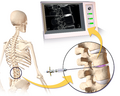 Lumbar provocative discography

Medical Disclaimer: WikiMD is for informational purposes only and is not a substitute for professional medical advice. Content may be inaccurate or outdated and should not be used for diagnosis or treatment. Always consult your healthcare provider for medical decisions. Verify information with trusted sources such as CDC.gov and NIH.gov. By using this site, you agree that WikiMD is not liable for any outcomes related to its content. See full disclaimer.
Credits:Most images are courtesy of Wikimedia commons, and templates, categories Wikipedia, licensed under CC BY SA or similar.
Translate this page: - East Asian
中文,
日本,
한국어,
South Asian
हिन्दी,
தமிழ்,
తెలుగు,
Urdu,
ಕನ್ನಡ,
Southeast Asian
Indonesian,
Vietnamese,
Thai,
မြန်မာဘာသာ,
বাংলা
European
español,
Deutsch,
français,
Greek,
português do Brasil,
polski,
română,
русский,
Nederlands,
norsk,
svenska,
suomi,
Italian
Middle Eastern & African
عربى,
Turkish,
Persian,
Hebrew,
Afrikaans,
isiZulu,
Kiswahili,
Other
Bulgarian,
Hungarian,
Czech,
Swedish,
മലയാളം,
मराठी,
ਪੰਜਾਬੀ,
ગુજરાતી,
Portuguese,
Ukrainian


