Nitrogen
Nitrogen is a chemical element with the symbol N and atomic number 7. It was first discovered and isolated by Scottish physician Daniel Rutherford in 1772. Nitrogen is the lightest member of group 15 of the periodic table, often called the pnictogens.
Characteristics[edit]
Nitrogen is a nonmetal, with an electronegativity of 3.04. It has five electrons in its outer shell and is therefore trivalent in most compounds. The triple bond in molecular nitrogen (N2) is the strongest in nature.
Occurrence[edit]
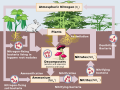
Nitrogen is the most abundant uncombined element in the Earth's atmosphere, making up about 78% of its volume. It is primarily produced by the ammonia-oxidizing bacteria as a waste product from the metabolism of ammonia.
Uses[edit]
Nitrogen is used in many industrial applications, such as in the production of ammonia, nitric acid, TNT, and fertilizers. It is also used as a refrigerant, in the manufacture of stainless steel, and in the electronics industry.
Biological role[edit]
Nitrogen is an essential element for life, as it is a constituent of DNA, RNA, and proteins. Nitrogen compounds are present in organic materials, foods, fertilizers, explosives, and poisons.
See also[edit]
References[edit]

This WikiMD article can only be edited by registered and verified editors. You can log in or register.
-
Nitrogen
-
Nitrogen
-
Nitrogen
-
Nitrogen
-
Nitrogen
-
Nitrogen
-
Nitrogen
-
Nitrogen
-
Nitrogen
-
 Nitrogen
 -
 Nitrogen
 -
 Nitrogen


Medical Disclaimer: WikiMD is for informational purposes only and is not a substitute for professional medical advice. Content may be inaccurate or outdated and should not be used for diagnosis or treatment. Always consult your healthcare provider for medical decisions. Verify information with trusted sources such as CDC.gov and NIH.gov. By using this site, you agree that WikiMD is not liable for any outcomes related to its content. See full disclaimer.
Credits:Most images are courtesy of Wikimedia commons, and templates, categories Wikipedia, licensed under CC BY SA or similar.
Translate page: - East Asian
中文,
日本,
한국어,
South Asian
हिन्दी,
தமிழ்,
తెలుగు,
Urdu,
ಕನ್ನಡ,
Southeast Asian
Indonesian,
Vietnamese,
Thai,
မြန်မာဘာသာ,
বাংলা
European
español,
Deutsch,
français,
Greek,
português do Brasil,
polski,
română,
русский,
Nederlands,
norsk,
svenska,
suomi,
Italian
Middle Eastern & African
عربى,
Turkish,
Persian,
Hebrew,
Afrikaans,
isiZulu,
Kiswahili,
Other
Bulgarian,
Hungarian,
Czech,
Swedish,
മലയാളം,
मराठी,
ਪੰਜਾਬੀ,
ગુજરાતી,
Portuguese,
Ukrainian


.png)


