Digitalis purpurea
Digitalis purpurea, commonly known as the foxglove or common foxglove, is a species of flowering plant in the plantaginaceae family. It is native to western and southwestern Europe, western and central Asia, and northwestern Africa. The plant is well known for its toxic effects and its use in medicine.
Description[edit]
Digitalis purpurea is a biennial or short-lived perennial plant. The leaves are spirally arranged, simple, 10–35 cm long and 5–12 cm broad, and are covered with gray-white pubescent and glandular hairs. The flowers are produced on a tall spike, are tubular, 2–3 cm long, with a broad, two-lipped mouth, and are pink to purple, with darker spots inside.
Distribution and habitat[edit]
Digitalis purpurea is native to a wide region of Europe from the western Mediterranean to Scandinavia. It is commonly found on sites where the ground has been disturbed, such as recently cleared woodland, or where trees have fallen.
Toxicity[edit]
All parts of the plant are toxic, and can be fatal if ingested. The plant contains cardiac glycosides, specifically digitalin, digitoxin, and digoxin, which are used in treating heart conditions.
Medicinal use[edit]
The use of Digitalis purpurea in treating heart conditions was first described by William Withering in 1785. The plant's cardiac glycosides increase the force of heart muscle contractions and slow the heart rate, particularly in patients with atrial fibrillation.
Cultivation[edit]
Digitalis purpurea is easily grown from seed, and is now naturalized in many parts of the world, including the United States and Canada. It is a popular ornamental plant for gardens, due to its large, bell-shaped flowers.
See also[edit]

This flora-related article is a stub. You can help WikiMD by expanding it.
 | This medical article is a stub. You can help WikiMD by expanding the page. |
-
 Digitalis purpurea
 -
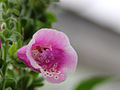 Digitalis purpurea
 -
 Digitalis purpurea
 -
 Digitalis purpurea
 -
 Digitalis purpurea
 -
 Digitalis purpurea
 -
 Digitalis purpurea
 -
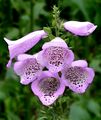 Digitalis purpurea
 -
 Digitalis purpurea
 -
 Digitalis purpurea
 -
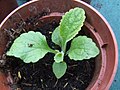 Digitalis purpurea
 -
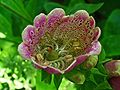 Digitalis purpurea


Advertise on WikiMD — 81,000+ full articles, ~900,000 total pages, ~250 million page views. Global reach, limited time promotional rates from $1/page/day. Learn more · View stats

Medical Disclaimer: WikiMD is for informational purposes only and is not a substitute for professional medical advice. Content may be inaccurate or outdated and should not be used for diagnosis or treatment. Always consult your healthcare provider for medical decisions. Verify information with trusted sources such as CDC.gov and NIH.gov. By using this site, you agree that WikiMD is not liable for any outcomes related to its content. See full disclaimer.
Credits:Most images are courtesy of Wikimedia commons, and templates, categories Wikipedia, licensed under CC BY SA or similar.
Translate page: - East Asian
中文,
日本,
한국어,
South Asian
हिन्दी,
தமிழ்,
తెలుగు,
Urdu,
ಕನ್ನಡ,
Southeast Asian
Indonesian,
Vietnamese,
Thai,
မြန်မာဘာသာ,
বাংলা
European
español,
Deutsch,
français,
Greek,
português do Brasil,
polski,
română,
русский,
Nederlands,
norsk,
svenska,
suomi,
Italian
Middle Eastern & African
عربى,
Turkish,
Persian,
Hebrew,
Afrikaans,
isiZulu,
Kiswahili,
Other
Bulgarian,
Hungarian,
Czech,
Swedish,
മലയാളം,
मराठी,
ਪੰਜਾਬੀ,
ગુજરાતી,
Portuguese,
Ukrainian

