Dictyostelid
Dictyostelid, also known as slime molds, are a group of single-celled eukaryotes that are capable of aggregating to form multicellular reproductive structures. Dictyostelids are unique in their life cycle and have been a subject of interest in various fields of biology due to their complex behaviors, which include aggregation, differentiation, and development. This article provides an overview of Dictyostelid biology, including their classification, life cycle, ecological role, and research significance.
Classification[edit]
Dictyostelids belong to the phylum Amoebozoa, which comprises amoeboid cells that move and feed by means of pseudopodia. Within Amoebozoa, Dictyostelids are classified under the class Dictyostelea. The classification of Dictyostelids has been refined over the years with the advent of molecular phylogenetics, leading to a clearer understanding of their evolutionary relationships.
Life Cycle[edit]
The life cycle of Dictyostelids is notable for its two distinct phases: the solitary amoeboid phase and the multicellular aggregate phase. In the amoeboid phase, individual cells live independently, feeding on bacteria. Upon depletion of food resources, the cells release chemical signals that lead to their aggregation. The aggregated cells then form a multicellular structure known as a pseudoplasmodium or slug, which can move as a single entity. Eventually, the slug differentiates into a fruiting body composed of a stalk and spores. The spores are dispersed to new locations, where they germinate into amoeboid cells, completing the cycle.
Ecological Role[edit]
Dictyostelids play a significant role in soil ecosystems. As predators of bacteria, they help regulate bacterial populations and contribute to the decomposition process. Their aggregation behavior and formation of fruiting bodies are also of interest in the study of cellular communication and differentiation.
Research Significance[edit]
Dictyostelids, particularly Dictyostelium discoideum, have been widely used as model organisms in biological research. Their relatively simple life cycle, ease of cultivation in the laboratory, and the availability of genetic and molecular tools make them excellent models for studying cell motility, chemotaxis, cell-cell communication, and development. Research on Dictyostelids has implications for understanding similar processes in higher organisms, including humans.
See Also[edit]
References[edit]
 | This Amoebozoa-related article is a stub. You can help WikiMD by expanding the page. |
-
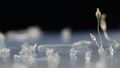 Dictyostelium discoideum in its natural habitat


Medical Disclaimer: WikiMD is for informational purposes only and is not a substitute for professional medical advice. Content may be inaccurate or outdated and should not be used for diagnosis or treatment. Always consult your healthcare provider for medical decisions. Verify information with trusted sources such as CDC.gov and NIH.gov. By using this site, you agree that WikiMD is not liable for any outcomes related to its content. See full disclaimer.
Credits:Most images are courtesy of Wikimedia commons, and templates, categories Wikipedia, licensed under CC BY SA or similar.
Translate page: - East Asian
中文,
日本,
한국어,
South Asian
हिन्दी,
தமிழ்,
తెలుగు,
Urdu,
ಕನ್ನಡ,
Southeast Asian
Indonesian,
Vietnamese,
Thai,
မြန်မာဘာသာ,
বাংলা
European
español,
Deutsch,
français,
Greek,
português do Brasil,
polski,
română,
русский,
Nederlands,
norsk,
svenska,
suomi,
Italian
Middle Eastern & African
عربى,
Turkish,
Persian,
Hebrew,
Afrikaans,
isiZulu,
Kiswahili,
Other
Bulgarian,
Hungarian,
Czech,
Swedish,
മലയാളം,
मराठी,
ਪੰਜਾਬੀ,
ગુજરાતી,
Portuguese,
Ukrainian

