Toothache
Pain in or around a tooth
| Toothache | |
|---|---|
| Address to the toothache.jpg | |
| Synonyms | N/A |
| Pronounce | N/A |
| Specialty | N/A |
| Symptoms | Pain in or around a tooth |
| Complications | Infection, abscess |
| Onset | N/A |
| Duration | N/A |
| Types | N/A |
| Causes | Dental caries, pulpitis, abscess |
| Risks | N/A |
| Diagnosis | Clinical examination, radiographs |
| Differential diagnosis | N/A |
| Prevention | N/A |
| Treatment | Dental treatment, pain management |
| Medication | N/A |
| Prognosis | N/A |
| Frequency | N/A |
| Deaths | N/A |
A toothache is pain in or around a tooth. It can be caused by a variety of dental issues, including dental caries, pulpitis, and dental abscess. Toothaches can range from mild discomfort to severe pain and can significantly affect a person's quality of life.
Causes[edit]
Toothaches can be caused by several dental conditions:
- Dental caries: Also known as cavities, these are caused by the breakdown of tooth enamel due to acids produced by bacteria in the mouth.
- Pulpitis: Inflammation of the dental pulp, which can be reversible or irreversible. Reversible pulpitis is mild and can be treated by removing the irritant, while irreversible pulpitis requires more extensive treatment such as a root canal.
- Dental abscess: A collection of pus that can form in different regions of the tooth due to bacterial infection. It can cause severe pain and swelling.
- Gingivitis and Periodontitis: Inflammation of the gums and supporting structures of the teeth can also lead to toothache.
- Tooth fracture: A cracked or broken tooth can expose the sensitive inner layers of the tooth, leading to pain.
Symptoms[edit]
The primary symptom of a toothache is pain in or around a tooth. The pain can be sharp, throbbing, or constant. In some cases, pain occurs only when pressure is applied to the tooth. Other symptoms that may accompany a toothache include:
- Swelling around the tooth
- Fever or headache
- Foul-tasting drainage from the infected tooth
- Sensitivity to hot or cold foods and drinks
Diagnosis[edit]
Diagnosis of a toothache involves a clinical examination by a dentist. The dentist will:
- Take a detailed history of the pain and any other symptoms
- Perform a physical examination of the mouth, teeth, and gums
- Use diagnostic tools such as dental radiographs (X-rays) to identify the underlying cause of the pain
Treatment[edit]
Treatment for a toothache depends on the underlying cause:
- Dental caries: Treatment may involve filling the cavity or, in severe cases, performing a root canal.
- Pulpitis: Reversible pulpitis can be treated by removing the irritant and restoring the tooth. Irreversible pulpitis may require a root canal or extraction.
- Dental abscess: Treatment involves draining the abscess and eliminating the infection, often through a root canal or extraction.
- Pain management: Over-the-counter pain relievers such as ibuprofen or acetaminophen can help manage pain until dental treatment is received.
Prevention[edit]
Preventing toothaches involves maintaining good oral hygiene and regular dental check-ups. Key preventive measures include:
- Brushing teeth twice a day with fluoride toothpaste
- Flossing daily to remove plaque between teeth
- Limiting sugary foods and drinks
- Regular dental visits for cleanings and examinations
Also see[edit]
-
Toothache
-
 Pulpitis
 -
 Abscessed tooth periapical radiograph
 -
 Open contact
 -
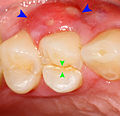 Cracked tooth lateral periodontal abscess
 -
 Ulcerative necrotizing gingivitis
 -
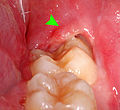 Pericoronitis with pus
 -
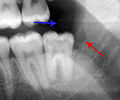 Pericoronitis x-ray
 -
 Cracked tooth
 -
 Angina pectoris
 -
 Cross sections of teeth
 -
 Innervation of the dentition


Ad. Transform your health with W8MD Weight Loss, Sleep & MedSpa

Tired of being overweight?
Special offer:
Budget GLP-1 weight loss medications
- Semaglutide starting from $29.99/week and up with insurance for visit of $59.99 and up per week self pay.
- Tirzepatide starting from $45.00/week and up (dose dependent) or $69.99/week and up self pay
✔ Same-week appointments, evenings & weekends
Learn more:
- GLP-1 weight loss clinic NYC
- W8MD's NYC medical weight loss
- W8MD Philadelphia GLP-1 shots
- Philadelphia GLP-1 injections
- Affordable GLP-1 shots NYC
- Budget GLP-1 shots
|
WikiMD Medical Encyclopedia |
Medical Disclaimer: WikiMD is for informational purposes only and is not a substitute for professional medical advice. Content may be inaccurate or outdated and should not be used for diagnosis or treatment. Always consult your healthcare provider for medical decisions. Verify information with trusted sources such as CDC.gov and NIH.gov. By using this site, you agree that WikiMD is not liable for any outcomes related to its content. See full disclaimer.
Credits:Most images are courtesy of Wikimedia commons, and templates, categories Wikipedia, licensed under CC BY SA or similar.
Translate this page: - East Asian
中文,
日本,
한국어,
South Asian
हिन्दी,
தமிழ்,
తెలుగు,
Urdu,
ಕನ್ನಡ,
Southeast Asian
Indonesian,
Vietnamese,
Thai,
မြန်မာဘာသာ,
বাংলা
European
español,
Deutsch,
français,
Greek,
português do Brasil,
polski,
română,
русский,
Nederlands,
norsk,
svenska,
suomi,
Italian
Middle Eastern & African
عربى,
Turkish,
Persian,
Hebrew,
Afrikaans,
isiZulu,
Kiswahili,
Other
Bulgarian,
Hungarian,
Czech,
Swedish,
മലയാളം,
मराठी,
ਪੰਜਾਬੀ,
ગુજરાતી,
Portuguese,
Ukrainian

