Cutaneous branch of the obturator nerve
The cutaneous branch of the obturator nerve is a peripheral nerve that provides sensory innervation to the skin of the medial aspect of the thigh. It is a branch of the obturator nerve, which is one of the major nerves of the lower limb.
Anatomy[edit]
The obturator nerve arises from the lumbar plexus, specifically from the ventral rami of the second, third, and fourth lumbar spinal nerves (L2-L4). It descends through the psoas major muscle and enters the pelvis through the obturator canal. Within the pelvis, the obturator nerve divides into an anterior and a posterior branch.
The cutaneous branch of the obturator nerve arises from the anterior division of the obturator nerve. It emerges from the obturator canal and passes through the obturator externus muscle. It then continues its course along the medial aspect of the thigh, providing sensory innervation to the skin in this region.
Function[edit]
The main function of the cutaneous branch of the obturator nerve is to provide sensory innervation to the medial aspect of the thigh. This includes the skin over the adductor muscles, the medial aspect of the knee, and the upper part of the medial leg.
The sensory information carried by the cutaneous branch of the obturator nerve includes touch, temperature, and pain. It allows for the perception of sensations in the medial thigh region and contributes to the overall sensory feedback from the lower limb.
Clinical Significance[edit]
Injury or compression of the cutaneous branch of the obturator nerve can result in sensory disturbances in the medial thigh region. This can manifest as numbness, tingling, or a loss of sensation in the affected area. The exact symptoms and severity of the sensory disturbances depend on the extent and location of the nerve injury.
Common causes of injury to the cutaneous branch of the obturator nerve include trauma, surgical procedures in the pelvic region, and compression due to anatomical variations or external pressure. In some cases, the symptoms may resolve spontaneously over time, while in others, medical intervention may be required to alleviate the symptoms.
Related Anatomy[edit]
The cutaneous branch of the obturator nerve is closely related to other structures in the medial thigh region. It runs parallel to the adductor longus muscle and is located deep to the sartorius muscle. It also lies superficial to the adductor magnus muscle.
The obturator nerve as a whole is closely associated with the obturator vessels, which are responsible for the blood supply to the medial thigh region. Additionally, the obturator nerve is in close proximity to the femoral nerve, which provides sensory and motor innervation to the anterior thigh muscles.
References[edit]
1. Standring, S. (Ed.). (2016). Gray's Anatomy: The Anatomical Basis of Clinical Practice (41st ed.). Elsevier.
2. Moore, K. L., Dalley, A. F., & Agur, A. M. R. (2014). Clinically Oriented Anatomy (7th ed.). Lippincott Williams & Wilkins.
See Also[edit]
-
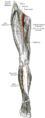 Gray's Anatomy illustration of the cutaneous branch of the obturator nerve

Sponsored Health Resource

W8MD Weight Loss, Sleep & MedSpa
Looking for physician-supervised weight loss, semaglutide, tirzepatide, or GLP-1 receptor agonist options? W8MD helps eligible patients in New York City, Brooklyn, New Jersey, Connecticut, Pennsylvania, Delaware, and greater Philadelphia with medical weight loss, sleep medicine, and long-term maintenance support.
GLP-1 specials: Affordable GLP-1 injections NYC and Philadelphia starting from $29.99/week and up for semaglutide with insurance accepted for qualifying visits, and $45/week and up for tirzepatide with insurance accepted for qualifying visits. Self-pay options start from $59.99/week and up for semaglutide and $69.99/week and up for tirzepatide.
Medical weight loss NYC | Affordable GLP-1 injections NYC | Budget GLP-1 weight loss shots Philadelphia | New Jersey medical weight loss | NYC medical weight loss | Philadelphia medical weight loss | Sleep clinic NYC | W8MD's Philadelphia GLP-1 doctor | Weight loss prescriptions NYC
Book a W8MD appointment · View GLP-1 specials
Paid promotional message. Eligibility, pricing, insurance coverage, medication availability, and results vary. Medical evaluation required.

Medical Disclaimer: WikiMD is for informational purposes only and is not a substitute for professional medical advice. Content may be inaccurate or outdated and should not be used for diagnosis or treatment. Always consult your healthcare provider for medical decisions. Verify information with trusted sources such as CDC.gov and NIH.gov. By using this site, you agree that WikiMD is not liable for any outcomes related to its content. See full disclaimer.
Credits:Most images are courtesy of Wikimedia commons, and templates, categories Wikipedia, licensed under CC BY SA or similar.
Translate page: - East Asian
中文,
日本,
한국어,
South Asian
हिन्दी,
தமிழ்,
తెలుగు,
Urdu,
ಕನ್ನಡ,
Southeast Asian
Indonesian,
Vietnamese,
Thai,
မြန်မာဘာသာ,
বাংলা
European
español,
Deutsch,
français,
Greek,
português do Brasil,
polski,
română,
русский,
Nederlands,
norsk,
svenska,
suomi,
Italian
Middle Eastern & African
عربى,
Turkish,
Persian,
Hebrew,
Afrikaans,
isiZulu,
Kiswahili,
Other
Bulgarian,
Hungarian,
Czech,
Swedish,
മലയാളം,
मराठी,
ਪੰਜਾਬੀ,
ગુજરાતી,
Portuguese,
Ukrainian

