Cupressaceae
Cupressaceae is a family of coniferous trees and shrubs, including the cypresses, junipers, and redwoods, among others. They are commonly known as the cypress family. The family is monophyletic and is one of the most ancient lineages of conifers, with a fossil record dating back over 200 million years.
Description[edit]
Members of the Cupressaceae family are evergreen, with small scale-like leaves. The trees are monoecious, with both sexes present on the same plant. The male cones are small and often numerous, while the female cones are larger, with scales that are often woody and thick.
Distribution[edit]
The Cupressaceae family is widespread, with members found in a wide range of habitats across the globe. They are most commonly found in the Northern Hemisphere, but also occur in the Southern Hemisphere in areas such as Australia and South America.
Taxonomy[edit]
The family Cupressaceae includes about 30 genera and 130-140 species. The family has been divided into seven subfamilies: Athrotaxidoideae, Callitroideae, Cupressoideae, Cunninghamioideae, Sequoioideae, Taiwanioideae, and Taxodioideae.
Uses[edit]
Many species within the Cupressaceae family are of economic importance. Some are used for timber, while others are popular ornamental trees in horticulture. Several species are also used in traditional medicine.
Conservation[edit]
Several species within the Cupressaceae family are threatened with extinction due to habitat loss and over-exploitation. Conservation efforts are underway to protect these species and their habitats.
See also[edit]
References[edit]
<references />
 | This medical article is a stub. You can help WikiMD by expanding the page. |
-
 Med Cypress
 -
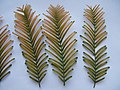 Metasequoia autumn foliage
 -
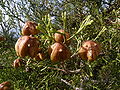 Alhucemas
 -
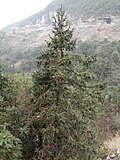 Cunninghamia
 -
 Taiwania cryptomerioides
 -
 Athrotaxis selaginoides
 -
 Taxodium distichum
 -
 Juniperus bermudiana


.JPG)


Medical Disclaimer: WikiMD is for informational purposes only and is not a substitute for professional medical advice. Content may be inaccurate or outdated and should not be used for diagnosis or treatment. Always consult your healthcare provider for medical decisions. Verify information with trusted sources such as CDC.gov and NIH.gov. By using this site, you agree that WikiMD is not liable for any outcomes related to its content. See full disclaimer.
Credits:Most images are courtesy of Wikimedia commons, and templates, categories Wikipedia, licensed under CC BY SA or similar.
Translate this page: - East Asian
中文,
日本,
한국어,
South Asian
हिन्दी,
தமிழ்,
తెలుగు,
Urdu,
ಕನ್ನಡ,
Southeast Asian
Indonesian,
Vietnamese,
Thai,
မြန်မာဘာသာ,
বাংলা
European
español,
Deutsch,
français,
Greek,
português do Brasil,
polski,
română,
русский,
Nederlands,
norsk,
svenska,
suomi,
Italian
Middle Eastern & African
عربى,
Turkish,
Persian,
Hebrew,
Afrikaans,
isiZulu,
Kiswahili,
Other
Bulgarian,
Hungarian,
Czech,
Swedish,
മലയാളം,
मराठी,
ਪੰਜਾਬੀ,
ગુજરાતી,
Portuguese,
Ukrainian
