Cup Noodles
Cup Noodles is a brand of instant ramen noodle snack, manufactured by Nissin Foods. It was invented in 1971 by Momofuku Ando, the founder of Nissin Foods, following the success of his invention of instant noodles in 1958. The product has become synonymous with instant ramen products worldwide, and is available in various flavors.
Etymology[edit]
The term "Cup Noodles" is derived from the packaging of the product. The noodles are pre-cooked and dried in a polystyrene cup. When hot water is added, the noodles become rehydrated and ready to eat. The convenience and portability of the product have contributed to its popularity.
History[edit]
Momofuku Ando invented Cup Noodles in 1971 as a portable, quick-cooking food option. The product was initially sold in a foam cup, but due to environmental concerns, the packaging was changed to a paper cup in some markets.
Varieties[edit]
Cup Noodles are available in a wide range of flavors, including chicken, beef, shrimp, and various regional flavors. In addition to the standard Cup Noodles, Nissin Foods also produces variations such as Cup Noodles Light (lower in calories), Cup Noodles Big (a larger serving size), and Cup Noodles Rice.
Cultural Impact[edit]
Cup Noodles have had a significant cultural impact, particularly in Japan where they are a staple food item. They have been featured in various forms of media, including movies, television shows, and video games. The Cup Noodles Museum in Yokohama, Japan, is dedicated to the history and cultural impact of Cup Noodles and instant ramen.
See Also[edit]

This WikiMD article can only be edited by registered and verified editors. You can log in or register.
-
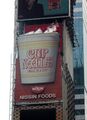 Cup Noodles ad - Times Square 02

Sponsored Health Resource

W8MD Weight Loss, Sleep & MedSpa
Looking for physician-supervised weight loss, semaglutide, tirzepatide, or GLP-1 receptor agonist options? W8MD helps eligible patients in New York City, Brooklyn, New Jersey, Connecticut, Pennsylvania, Delaware, and greater Philadelphia with medical weight loss, sleep medicine, and long-term maintenance support.
GLP-1 specials: Affordable GLP-1 injections NYC and Philadelphia starting from $29.99/week and up for semaglutide with insurance accepted for qualifying visits, and $45/week and up for tirzepatide with insurance accepted for qualifying visits. Self-pay options start from $59.99/week and up for semaglutide and $69.99/week and up for tirzepatide.
Medical weight loss NYC | Affordable GLP-1 injections NYC | Budget GLP-1 weight loss shots Philadelphia | New Jersey medical weight loss | NYC medical weight loss | Philadelphia medical weight loss | Sleep clinic NYC | W8MD's Philadelphia GLP-1 doctor | Weight loss prescriptions NYC
Book a W8MD appointment · View GLP-1 specials
Paid promotional message. Eligibility, pricing, insurance coverage, medication availability, and results vary. Medical evaluation required.

Medical Disclaimer: WikiMD is for informational purposes only and is not a substitute for professional medical advice. Content may be inaccurate or outdated and should not be used for diagnosis or treatment. Always consult your healthcare provider for medical decisions. Verify information with trusted sources such as CDC.gov and NIH.gov. By using this site, you agree that WikiMD is not liable for any outcomes related to its content. See full disclaimer.
Credits:Most images are courtesy of Wikimedia commons, and templates, categories Wikipedia, licensed under CC BY SA or similar.
Translate page: - East Asian
中文,
日本,
한국어,
South Asian
हिन्दी,
தமிழ்,
తెలుగు,
Urdu,
ಕನ್ನಡ,
Southeast Asian
Indonesian,
Vietnamese,
Thai,
မြန်မာဘာသာ,
বাংলা
European
español,
Deutsch,
français,
Greek,
português do Brasil,
polski,
română,
русский,
Nederlands,
norsk,
svenska,
suomi,
Italian
Middle Eastern & African
عربى,
Turkish,
Persian,
Hebrew,
Afrikaans,
isiZulu,
Kiswahili,
Other
Bulgarian,
Hungarian,
Czech,
Swedish,
മലയാളം,
मराठी,
ਪੰਜਾਬੀ,
ગુજરાતી,
Portuguese,
Ukrainian

