Creamed corn
Creamed corn is a type of corn dish that is popular in various regions of the world, including the United States, Canada, and some parts of Asia. It is made by pulping corn kernels and collecting the resulting "milk", then combining this with the kernels. The dish is typically served as a side dish, but can also be used as an ingredient in other recipes.
History[edit]
The origins of creamed corn are not entirely clear, but it is believed to have been a staple food for Native Americans long before the arrival of Europeans. The dish was likely adapted by European settlers and has since become a common feature of American cuisine.
Preparation[edit]
The traditional method of preparing creamed corn involves removing the husk and silk from fresh corn cobs, then cutting the kernels from the cob. The remaining cob is then scraped to extract the "milk". This mixture is then cooked with butter, cream, salt, and sugar until it reaches a creamy consistency.
In modern times, creamed corn can also be made using canned or frozen corn. Some recipes may also include additional ingredients such as onions, peppers, or herbs for added flavor.
Uses[edit]
Creamed corn is often served as a side dish, particularly with meals featuring meat or poultry. It is also a common ingredient in dishes such as cornbread, corn pudding, and corn chowder. In addition, creamed corn can be used as a topping for dishes like shepherd's pie.
Variations[edit]
There are many regional variations of creamed corn. In the southern United States, for example, it is often made with heavy cream and sugar, giving it a sweet flavor. In the Midwest, it is typically made with milk and is less sweet. In Asian countries like China and Japan, creamed corn is often used as a filling for pastries or as a topping for dishes like ramen.
See also[edit]

-
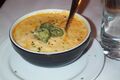 Creamed corn
 -
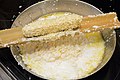 Cooking creamed corn
 -
 Creamed corn on plate


Medical Disclaimer: WikiMD is for informational purposes only and is not a substitute for professional medical advice. Content may be inaccurate or outdated and should not be used for diagnosis or treatment. Always consult your healthcare provider for medical decisions. Verify information with trusted sources such as CDC.gov and NIH.gov. By using this site, you agree that WikiMD is not liable for any outcomes related to its content. See full disclaimer.
Credits:Most images are courtesy of Wikimedia commons, and templates, categories Wikipedia, licensed under CC BY SA or similar.
Translate page: - East Asian
中文,
日本,
한국어,
South Asian
हिन्दी,
தமிழ்,
తెలుగు,
Urdu,
ಕನ್ನಡ,
Southeast Asian
Indonesian,
Vietnamese,
Thai,
မြန်မာဘာသာ,
বাংলা
European
español,
Deutsch,
français,
Greek,
português do Brasil,
polski,
română,
русский,
Nederlands,
norsk,
svenska,
suomi,
Italian
Middle Eastern & African
عربى,
Turkish,
Persian,
Hebrew,
Afrikaans,
isiZulu,
Kiswahili,
Other
Bulgarian,
Hungarian,
Czech,
Swedish,
മലയാളം,
मराठी,
ਪੰਜਾਬੀ,
ગુજરાતી,
Portuguese,
Ukrainian

