Cone beam computed tomography
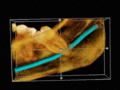
Cone Beam Computed Tomography (CBCT) is a type of medical imaging technique that uses a special type of X-ray machine to generate 3D images of the patient's anatomy. This technology is particularly useful in the field of dentistry, where it is used to create detailed images of the teeth and jaw.
Overview[edit]
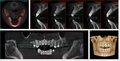
CBCT is a relatively new technology, having been introduced in the early 2000s. It uses a cone-shaped X-ray beam to capture data from multiple angles around the patient. This data is then used to reconstruct a 3D image of the patient's anatomy, which can be viewed from any angle and at any magnification.
Applications[edit]
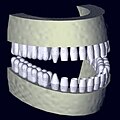
CBCT is primarily used in the field of dentistry, where it is used to create detailed images of the teeth and jaw. It is particularly useful for diagnosing and treating conditions such as dental implants, orthodontics, endodontics, and oral surgery. It can also be used in other fields of medicine, such as radiology and otolaryngology.
Advantages[edit]
One of the main advantages of CBCT is that it provides a more detailed and accurate image than traditional 2D X-rays. This allows for more precise diagnosis and treatment planning. Additionally, CBCT exposes the patient to less radiation than traditional CT scans.
Disadvantages[edit]
Despite its advantages, CBCT also has some disadvantages. The main one is that it exposes the patient to more radiation than traditional 2D X-rays. Additionally, the images produced by CBCT are not as detailed as those produced by traditional CT scans, which can make it less suitable for certain applications.
See Also[edit]

This WikiMD article can only be edited by registered and verified editors. You can log in or register.
-
 Cone beam computed tomography
 -
 Cone beam computed tomography
 -
 Cone beam computed tomography
 -
 Cone beam computed tomography
 -
 Cone beam computed tomography
 -
 Cone beam computed tomography
 -
 Cone beam computed tomography
 -
 Cone beam computed tomography
 -
 Cone beam computed tomography
 -
 Cone beam computed tomography
 -
 Cone beam computed tomography
 -
 Cone beam computed tomography


Medical Disclaimer: WikiMD is for informational purposes only and is not a substitute for professional medical advice. Content may be inaccurate or outdated and should not be used for diagnosis or treatment. Always consult your healthcare provider for medical decisions. Verify information with trusted sources such as CDC.gov and NIH.gov. By using this site, you agree that WikiMD is not liable for any outcomes related to its content. See full disclaimer.
Credits:Most images are courtesy of Wikimedia commons, and templates, categories Wikipedia, licensed under CC BY SA or similar.
Translate page: - East Asian
中文,
日本,
한국어,
South Asian
हिन्दी,
தமிழ்,
తెలుగు,
Urdu,
ಕನ್ನಡ,
Southeast Asian
Indonesian,
Vietnamese,
Thai,
မြန်မာဘာသာ,
বাংলা
European
español,
Deutsch,
français,
Greek,
português do Brasil,
polski,
română,
русский,
Nederlands,
norsk,
svenska,
suomi,
Italian
Middle Eastern & African
عربى,
Turkish,
Persian,
Hebrew,
Afrikaans,
isiZulu,
Kiswahili,
Other
Bulgarian,
Hungarian,
Czech,
Swedish,
മലയാളം,
मराठी,
ਪੰਜਾਬੀ,
ગુજરાતી,
Portuguese,
Ukrainian

