Conducting
Conducting is the art of directing a musical performance by way of visible gestures. The primary duties of the conductor are to interpret the score in a way which reflects the specific indications in that score, set the tempo, ensure correct entries by ensemble members, and "shape" the phrasing where appropriate.
History[edit]
The role of the conductor in music has been crucial since the early 19th century. It was during this time that the size of the orchestra began to increase, making it necessary for a single person to coordinate all the musical elements.
Techniques[edit]
Conducting techniques vary from conductor to conductor. Some use a baton, while others prefer to use their hands. The conductor's left hand often controls the dynamics of the music, while the right hand, holding the baton, controls the tempo and articulation.
Types of Conductors[edit]
There are several types of conductors, including:
- Orchestral Conductors: These conductors work with symphony orchestras and are responsible for leading rehearsals and performances.
- Choral Conductors: These conductors work with choirs and are responsible for leading rehearsals and performances.
- Band Conductors: These conductors work with concert bands, marching bands, and other types of bands and are responsible for leading rehearsals and performances.
See Also[edit]
References[edit]
<references />
 | This medical article is a stub. You can help WikiMD by expanding the page. |
-
 Herbert von Karajan conducting
 -
 Verdi conducting Aida in Paris, 1880
 -
 Leonard Bernstein conducting at the Holland Festival
 -
 Conducting
 -
 Conducting
 -
 Conducting
 -
 Conducting
 -
 Conducting
 -
 Conducting
 -
 Conducting
 -
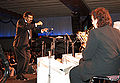 David Baker leading the Smithsonian Jazz Masterworks Orchestra


_leading_the_Smithsonian_Jazz_Masterworks_Orchestra.jpg)
Medical Disclaimer: WikiMD is for informational purposes only and is not a substitute for professional medical advice. Content may be inaccurate or outdated and should not be used for diagnosis or treatment. Always consult your healthcare provider for medical decisions. Verify information with trusted sources such as CDC.gov and NIH.gov. By using this site, you agree that WikiMD is not liable for any outcomes related to its content. See full disclaimer.
Credits:Most images are courtesy of Wikimedia commons, and templates, categories Wikipedia, licensed under CC BY SA or similar.
Translate this page: - East Asian
中文,
日本,
한국어,
South Asian
हिन्दी,
தமிழ்,
తెలుగు,
Urdu,
ಕನ್ನಡ,
Southeast Asian
Indonesian,
Vietnamese,
Thai,
မြန်မာဘာသာ,
বাংলা
European
español,
Deutsch,
français,
Greek,
português do Brasil,
polski,
română,
русский,
Nederlands,
norsk,
svenska,
suomi,
Italian
Middle Eastern & African
عربى,
Turkish,
Persian,
Hebrew,
Afrikaans,
isiZulu,
Kiswahili,
Other
Bulgarian,
Hungarian,
Czech,
Swedish,
മലയാളം,
मराठी,
ਪੰਜਾਬੀ,
ગુજરાતી,
Portuguese,
Ukrainian
