Complementary colors
Complementary Colors
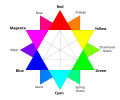
Complementary colors are pairs of colors that, when combined in the right proportions, produce a neutral color (such as white, gray, or black). In the context of color theory, complementary colors are located opposite each other on the color wheel. This relationship is fundamental in art, design, and visual perception.
Color Theory[edit]
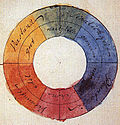
Color theory is a body of practical guidance to color mixing and the visual effects of specific color combinations. Complementary colors play a crucial role in this theory, as they are used to create contrast and visual interest.
Primary and Secondary Colors[edit]
In the traditional color wheel, the primary colors are red, blue, and yellow. The secondary colors, which are created by mixing two primary colors, are green, orange, and purple. Each primary color has a complementary secondary color:
- Red and green
- Blue and orange
- Yellow and purple
These pairs are considered complementary because they are opposite each other on the color wheel.
Visual Effects[edit]
Complementary colors have a high contrast when placed next to each other, which makes them stand out. This is why they are often used in art and design to draw attention to specific elements. When mixed together, complementary colors cancel each other out, creating a grayscale color like white or black.
Afterimage Effect[edit]
When the human eye is exposed to one color for an extended period, it can create an afterimage of its complementary color. This phenomenon is due to the way our eyes and brain process color information.
Applications[edit]
Complementary colors are used in various fields, including:
- Art and Design: Artists use complementary colors to create vibrant and dynamic compositions.
- Fashion: Designers use these colors to create striking and bold outfits.
- Marketing: Advertisers use complementary colors to make products stand out and catch the consumer's eye.
Also see[edit]
-
 Complementary_colors
 -
 Complementary_colors
 -
 Complementary_colors
 -
 Complementary_colors
 -
 Complementary_colors
 -
 Complementary_colors
 -
 Complementary_colors
 -
 Complementary_colors
 -
 Complementary_colors
 -
 Complementary_colors
 -
 Complementary_colors
 -
 Complementary_colors


.png)
.svg)


Medical Disclaimer: WikiMD is for informational purposes only and is not a substitute for professional medical advice. Content may be inaccurate or outdated and should not be used for diagnosis or treatment. Always consult your healthcare provider for medical decisions. Verify information with trusted sources such as CDC.gov and NIH.gov. By using this site, you agree that WikiMD is not liable for any outcomes related to its content. See full disclaimer.
Credits:Most images are courtesy of Wikimedia commons, and templates, categories Wikipedia, licensed under CC BY SA or similar.
Translate this page: - East Asian
中文,
日本,
한국어,
South Asian
हिन्दी,
தமிழ்,
తెలుగు,
Urdu,
ಕನ್ನಡ,
Southeast Asian
Indonesian,
Vietnamese,
Thai,
မြန်မာဘာသာ,
বাংলা
European
español,
Deutsch,
français,
Greek,
português do Brasil,
polski,
română,
русский,
Nederlands,
norsk,
svenska,
suomi,
Italian
Middle Eastern & African
عربى,
Turkish,
Persian,
Hebrew,
Afrikaans,
isiZulu,
Kiswahili,
Other
Bulgarian,
Hungarian,
Czech,
Swedish,
മലയാളം,
मराठी,
ਪੰਜਾਬੀ,
ગુજરાતી,
Portuguese,
Ukrainian
