Anterior compartment of the forearm
The anterior compartment of the forearm is a key anatomical region that contains muscles primarily involved in the flexion and pronation of the wrist and fingers. This compartment is delineated by the flexor retinaculum and the antebrachial fascia, and is divided from the posterior compartment of the forearm by the ulna and radius, the bones of the forearm.
Anatomy[edit]
The anterior compartment is separated from the posterior compartment by the interosseous membrane and is further divided into superficial and deep layers based on the muscles contained within each.
Superficial Layer[edit]
The superficial layer includes the following muscles:
- Pronator teres: Assists in pronating the forearm.
- Flexor carpi radialis: Flexes and abducts the wrist.
- Palmaris longus: Flexes the wrist and tenses the palmar aponeurosis.
- Flexor carpi ulnaris: Flexes and adducts the wrist.
- Flexor digitorum superficialis: Flexes the middle phalanges of the fingers.
Deep Layer[edit]
The deep layer contains:
- Flexor digitorum profundus: Flexes the distal phalanges of the fingers.
- Flexor pollicis longus: Flexes the distal phalanx of the thumb.
- Pronator quadratus: Pronates the forearm.
Blood Supply and Innervation[edit]
The anterior compartment is primarily supplied by the ulnar artery and the radial artery. The median nerve and the ulnar nerve are responsible for the innervation of the muscles in this compartment, with the exception of the flexor carpi ulnaris and the medial half of the flexor digitorum profundus, which are innervated by the ulnar nerve.
Clinical Significance[edit]
Conditions affecting the anterior compartment of the forearm include carpal tunnel syndrome, which is caused by compression of the median nerve, and pronator teres syndrome, a condition that mimics carpal tunnel syndrome but involves entrapment of the median nerve at the forearm. Understanding the anatomy of the anterior compartment is crucial for diagnosing and treating these conditions.
See Also[edit]

-
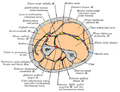 Muscles of the anterior compartment of the forearm
 -
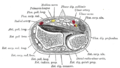 Superficial muscles of the anterior compartment
 -
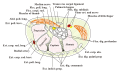 Carpal tunnel anatomy


Medical Disclaimer: WikiMD is for informational purposes only and is not a substitute for professional medical advice. Content may be inaccurate or outdated and should not be used for diagnosis or treatment. Always consult your healthcare provider for medical decisions. Verify information with trusted sources such as CDC.gov and NIH.gov. By using this site, you agree that WikiMD is not liable for any outcomes related to its content. See full disclaimer.
Credits:Most images are courtesy of Wikimedia commons, and templates, categories Wikipedia, licensed under CC BY SA or similar.
Translate page: - East Asian
中文,
日本,
한국어,
South Asian
हिन्दी,
தமிழ்,
తెలుగు,
Urdu,
ಕನ್ನಡ,
Southeast Asian
Indonesian,
Vietnamese,
Thai,
မြန်မာဘာသာ,
বাংলা
European
español,
Deutsch,
français,
Greek,
português do Brasil,
polski,
română,
русский,
Nederlands,
norsk,
svenska,
suomi,
Italian
Middle Eastern & African
عربى,
Turkish,
Persian,
Hebrew,
Afrikaans,
isiZulu,
Kiswahili,
Other
Bulgarian,
Hungarian,
Czech,
Swedish,
മലയാളം,
मराठी,
ਪੰਜਾਬੀ,
ગુજરાતી,
Portuguese,
Ukrainian

