Coa de jima

Coa de Jima is a traditional tool used in the agave cultivation and tequila production process. It is a specialized type of hoe or spade, featuring a sharp, flat blade that is used primarily by jimadores, the skilled laborers who harvest agave plants in Mexico. The coa de jima is an essential tool in the tequila industry, as it allows jimadores to efficiently cut away the leaves of the agave plant to reach the "piña," or core, which is the part of the plant used for producing tequila.
History[edit]
The use of the coa de jima dates back several centuries, with its origins deeply rooted in the history of agave cultivation in Mexico. The tool has evolved over time but has always played a crucial role in the harvesting of agave plants, which are native to the region. The expertise in using the coa de jima is passed down from generation to generation among jimadores, making it not only a tool but also a symbol of tradition and craftsmanship in the tequila-making process.
Design and Use[edit]
The coa de jima consists of a long wooden handle attached to a sharp, flat, and often slightly curved metal blade. The design of the blade allows jimadores to skillfully slice through the thick leaves of the agave plant, minimizing damage to the piña. The length of the handle provides leverage, enabling the jimador to apply significant force to the blade while maintaining control and precision.
The skillful use of the coa de jima is critical in the tequila production process. A properly harvested agave piña will result in higher quality tequila. The jimadores' expertise in using this tool ensures that only the best parts of the agave plant are used, while also preserving the health of the plant for future growth, in the case of certain agave species that do not die after harvesting.
Cultural Significance[edit]
The coa de jima is more than just a tool; it is a symbol of the cultural heritage of tequila production in Mexico. The knowledge and skills required to use the coa de jima effectively are highly respected, and jimadores are regarded as artisans in their own right. The process of harvesting agave with a coa de jima is often celebrated in Mexican culture, highlighting the importance of tradition and craftsmanship in the production of tequila.
Preservation and Challenges[edit]
As the tequila industry continues to grow, there is an increasing focus on preserving traditional methods of agave cultivation and harvesting. The use of the coa de jima is central to these efforts, as it represents a sustainable and artisanal approach to tequila production. However, the physical demands of using the coa de jima and the skill required to wield it effectively present challenges in attracting new generations to the profession of jimador.
Conclusion[edit]
The coa de jima is an indispensable tool in the production of tequila, embodying the tradition, culture, and craftsmanship of agave cultivation in Mexico. Its continued use not only ensures the quality of tequila but also preserves an important aspect of Mexican heritage. As the tequila industry evolves, the coa de jima remains a symbol of the enduring value of traditional methods and the skilled artisans who practice them.
-
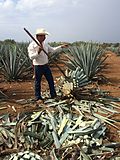 El jimador
Ad. Transform your health with W8MD Weight Loss, Sleep & MedSpa

Tired of being overweight?
Special offer:
Budget GLP-1 weight loss medications
- Semaglutide starting from $29.99/week and up with insurance for visit of $59.99 and up per week self pay.
- Tirzepatide starting from $45.00/week and up (dose dependent) or $69.99/week and up self pay
✔ Same-week appointments, evenings & weekends
Learn more:
- GLP-1 weight loss clinic NYC
- W8MD's NYC medical weight loss
- W8MD Philadelphia GLP-1 shots
- Philadelphia GLP-1 injections
- Affordable GLP-1 shots NYC
|
WikiMD Medical Encyclopedia |
Medical Disclaimer: WikiMD is for informational purposes only and is not a substitute for professional medical advice. Content may be inaccurate or outdated and should not be used for diagnosis or treatment. Always consult your healthcare provider for medical decisions. Verify information with trusted sources such as CDC.gov and NIH.gov. By using this site, you agree that WikiMD is not liable for any outcomes related to its content. See full disclaimer.
Credits:Most images are courtesy of Wikimedia commons, and templates, categories Wikipedia, licensed under CC BY SA or similar.
Translate this page: - East Asian
中文,
日本,
한국어,
South Asian
हिन्दी,
தமிழ்,
తెలుగు,
Urdu,
ಕನ್ನಡ,
Southeast Asian
Indonesian,
Vietnamese,
Thai,
မြန်မာဘာသာ,
বাংলা
European
español,
Deutsch,
français,
Greek,
português do Brasil,
polski,
română,
русский,
Nederlands,
norsk,
svenska,
suomi,
Italian
Middle Eastern & African
عربى,
Turkish,
Persian,
Hebrew,
Afrikaans,
isiZulu,
Kiswahili,
Other
Bulgarian,
Hungarian,
Czech,
Swedish,
മലയാളം,
मराठी,
ਪੰਜਾਬੀ,
ગુજરાતી,
Portuguese,
Ukrainian
