Chinese Communist Party
The Chinese Communist Party (CCP) is the ruling political party in the People's Republic of China. Founded in 1921, the CCP has played a significant role in shaping the country's political, economic, and social landscape. As of 2021, it is the largest political party in the world, with over 91 million members.
History[edit]
The CCP was established on July 1, 1921, in Shanghai, China. It was formed by a group of intellectuals and revolutionaries who sought to bring about social and political change in China. The party's early years were marked by internal struggles and challenges, but it gained momentum during the Chinese Civil War against the ruling Nationalist Party.
Under the leadership of Mao Zedong, the CCP emerged victorious in the civil war and established the People's Republic of China in 1949. Mao's ideology, known as Maoism, became the guiding principle of the party and the country's governance. The CCP implemented various policies, including land reforms, collectivization, and the Great Leap Forward, which aimed to transform China into a socialist society.
Ideology[edit]
The CCP's ideology has evolved over time, but it remains rooted in Marxism-Leninism and Mao Zedong Thought. The party advocates for socialism with Chinese characteristics, which combines socialist principles with market-oriented economic reforms. It emphasizes the leadership of the working class and the importance of maintaining the unity of the Chinese people.
Organization and Structure[edit]
The CCP operates on a hierarchical structure, with the National Congress being the highest authority. The National Congress is held every five years and elects the Central Committee, which in turn elects the Politburo and its Standing Committee. The General Secretary of the CCP is the most powerful position within the party and serves as the country's paramount leader.
The party has a vast network of branches and organizations at various levels, including provincial, city, and grassroots levels. These branches play a crucial role in implementing party policies, mobilizing the masses, and maintaining party discipline.
Influence and Challenges[edit]
The CCP's influence extends beyond politics and into various aspects of Chinese society. It controls the state apparatus, including the government, military, and judiciary. The party also plays a significant role in the economy, with many state-owned enterprises being under its control.
However, the CCP also faces challenges, both internal and external. Internally, it grapples with issues such as corruption, social inequality, and public discontent. Externally, it faces criticism and scrutiny from the international community regarding human rights, censorship, and its assertive foreign policy.
See Also[edit]
References[edit]
-
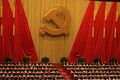 18th National Congress of the Communist Party of China


Medical Disclaimer: WikiMD is for informational purposes only and is not a substitute for professional medical advice. Content may be inaccurate or outdated and should not be used for diagnosis or treatment. Always consult your healthcare provider for medical decisions. Verify information with trusted sources such as CDC.gov and NIH.gov. By using this site, you agree that WikiMD is not liable for any outcomes related to its content. See full disclaimer.
Credits:Most images are courtesy of Wikimedia commons, and templates, categories Wikipedia, licensed under CC BY SA or similar.
Translate page: - East Asian
中文,
日本,
한국어,
South Asian
हिन्दी,
தமிழ்,
తెలుగు,
Urdu,
ಕನ್ನಡ,
Southeast Asian
Indonesian,
Vietnamese,
Thai,
မြန်မာဘာသာ,
বাংলা
European
español,
Deutsch,
français,
Greek,
português do Brasil,
polski,
română,
русский,
Nederlands,
norsk,
svenska,
suomi,
Italian
Middle Eastern & African
عربى,
Turkish,
Persian,
Hebrew,
Afrikaans,
isiZulu,
Kiswahili,
Other
Bulgarian,
Hungarian,
Czech,
Swedish,
മലയാളം,
मराठी,
ਪੰਜਾਬੀ,
ગુજરાતી,
Portuguese,
Ukrainian

