Château
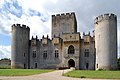
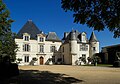
Château is a French term that is used to describe a manor house or a residence of the lord of the manor or a country house of nobility or gentry, with or without fortifications, originally—and still most frequently—in French-speaking regions.
History[edit]
The term Château comes from the French word, "château", which is derived from the Old French "castel", meaning "fortress". The term was used to denote the principal residence of a lord or noble during the Middle Ages. The architectural design of the château often included defensive capabilities, such as a keep, drawbridge, and moat.
Architecture[edit]
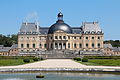
The architecture of a Château can vary greatly depending on the time period and region in which it was built. Early châteaux were often simple stone buildings surrounded by a wall. As architectural styles evolved, châteaux began to incorporate more elaborate features, such as towers, ornate carvings, and large, grand halls. The Renaissance period saw a shift towards more luxurious châteaux, with a focus on comfort and elegance over defensive capabilities.
Modern Usage[edit]
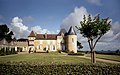
In modern usage, the term Château can refer to a variety of structures, including country houses, mansions, and vineyards in the French wine regions. Some châteaux are now used as hotels, restaurants, or museums, while others remain private residences.
See Also[edit]
References[edit]
<references />
 | This architecture-related article is a stub. You can help WikiMD by expanding the page. |
-
 Château
 -
 Château
 -
 Château
 -
 Château
 -
 Château
 -
 Château
 -
 Château
 -
 Château
 -
 Château
 -
 Château
 -
 Château
 -
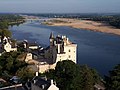 Château


.jpg)


.jpg)


.JPG)

Medical Disclaimer: WikiMD is for informational purposes only and is not a substitute for professional medical advice. Content may be inaccurate or outdated and should not be used for diagnosis or treatment. Always consult your healthcare provider for medical decisions. Verify information with trusted sources such as CDC.gov and NIH.gov. By using this site, you agree that WikiMD is not liable for any outcomes related to its content. See full disclaimer.
Credits:Most images are courtesy of Wikimedia commons, and templates, categories Wikipedia, licensed under CC BY SA or similar.
Translate this page: - East Asian
中文,
日本,
한국어,
South Asian
हिन्दी,
தமிழ்,
తెలుగు,
Urdu,
ಕನ್ನಡ,
Southeast Asian
Indonesian,
Vietnamese,
Thai,
မြန်မာဘာသာ,
বাংলা
European
español,
Deutsch,
français,
Greek,
português do Brasil,
polski,
română,
русский,
Nederlands,
norsk,
svenska,
suomi,
Italian
Middle Eastern & African
عربى,
Turkish,
Persian,
Hebrew,
Afrikaans,
isiZulu,
Kiswahili,
Other
Bulgarian,
Hungarian,
Czech,
Swedish,
മലയാളം,
मराठी,
ਪੰਜਾਬੀ,
ગુજરાતી,
Portuguese,
Ukrainian
