Cerebellar model articulation controller
Cerebellar Model Articulation Controller (CMAC) is a type of neural network that was first proposed by James Albus in 1975 as a model of the cerebellum in the brain. The cerebellum is a region of the brain that plays a significant role in motor control, and it is believed to function as a learning system that supports the calibration of motor actions. CMAC is designed to mimic this functionality, making it a powerful tool for machine learning and robotics applications where adaptive control is required.
Overview[edit]
CMAC is a form of associative memory that is particularly suited for approximating complex nonlinear mappings and functions. Unlike traditional artificial neural networks, CMAC offers the advantage of faster learning rates and requires less computational power for training. This makes it an attractive option for real-time control systems and applications where computational resources are limited.
Structure[edit]
The structure of a CMAC consists of several layers: the input layer, the association layer, and the output layer. The input layer receives the raw input signals, which are then transformed into a higher-dimensional space in the association layer. This transformation is achieved through a process known as quantization, where the input space is divided into discrete regions or cells. Each cell is associated with a unique set of memory locations in the association layer. The output layer then aggregates the values stored in these memory locations to produce the final output.
Learning Process[edit]
The learning process in CMAC involves adjusting the weights of the memory cells in the association layer based on the difference between the desired output and the actual output. This is typically done using a supervised learning algorithm, such as the least mean squares (LMS) method. The goal of the learning process is to minimize the error between the predicted output and the actual output, thereby improving the accuracy of the model over time.
Applications[edit]
CMAC has been successfully applied in a variety of fields, including robotic control, pattern recognition, and signal processing. In robotics, CMAC can be used to develop adaptive controllers that can learn and adjust their behavior in response to changes in the environment. In pattern recognition, CMAC can be utilized to classify input patterns based on learned associations. Similarly, in signal processing, CMAC can be employed to predict and filter signals.
Advantages and Limitations[edit]
One of the main advantages of CMAC is its ability to learn and adapt quickly, which is crucial for applications requiring real-time performance. Additionally, its simple structure and computational efficiency make it suitable for implementation on hardware with limited processing capabilities. However, CMAC also has some limitations, including the potential for overfitting in cases where the number of memory cells is not properly configured. Furthermore, the quantization process can lead to a loss of information, which may affect the accuracy of the model.
Conclusion[edit]
The Cerebellar Model Articulation Controller is a powerful and efficient model for learning and control, inspired by the cerebellum's function in the human brain. Its ability to quickly learn and adapt to new situations makes it an invaluable tool in the fields of robotics, pattern recognition, and beyond. Despite its limitations, ongoing research and development continue to expand the capabilities and applications of CMAC in various domains.
 | This artificial intelligence-related article is a stub. You can help WikiMD by expanding the page. |
This neural network related article is a stub. You can help WikiMD by expanding it.
 | This robotics-related article is a stub. You can help WikiMD by expanding the page. |
-
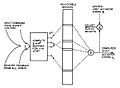 CMAC System Block Diagram
 -
 CMAC Hashing
 -
 Cerebellar Model Articulation Controller
 -
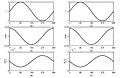 Cerebellar Model Articulation Controller


Medical Disclaimer: WikiMD is for informational purposes only and is not a substitute for professional medical advice. Content may be inaccurate or outdated and should not be used for diagnosis or treatment. Always consult your healthcare provider for medical decisions. Verify information with trusted sources such as CDC.gov and NIH.gov. By using this site, you agree that WikiMD is not liable for any outcomes related to its content. See full disclaimer.
Credits:Most images are courtesy of Wikimedia commons, and templates, categories Wikipedia, licensed under CC BY SA or similar.
Translate page: - East Asian
中文,
日本,
한국어,
South Asian
हिन्दी,
தமிழ்,
తెలుగు,
Urdu,
ಕನ್ನಡ,
Southeast Asian
Indonesian,
Vietnamese,
Thai,
မြန်မာဘာသာ,
বাংলা
European
español,
Deutsch,
français,
Greek,
português do Brasil,
polski,
română,
русский,
Nederlands,
norsk,
svenska,
suomi,
Italian
Middle Eastern & African
عربى,
Turkish,
Persian,
Hebrew,
Afrikaans,
isiZulu,
Kiswahili,
Other
Bulgarian,
Hungarian,
Czech,
Swedish,
മലയാളം,
मराठी,
ਪੰਜਾਬੀ,
ગુજરાતી,
Portuguese,
Ukrainian

