Central tegmental tract
The Central Tegmental Tract (CTT) is a neural pathway located in the brainstem that plays a crucial role in motor control and coordination. It is a part of the extrapyramidal system, which is responsible for regulating involuntary movements.
Anatomy[edit]
The CTT originates in the midbrain, specifically in the periaqueductal gray (PAG) and the adjacent deep mesencephalic nucleus. From there, it descends through the brainstem, passing through the pontine tegmentum and the medullary tegmentum. It terminates in the spinal cord, specifically in the ventral horn, where it synapses with lower motor neurons.
Function[edit]
The main function of the CTT is to transmit motor signals from the midbrain to the spinal cord. It is involved in the regulation of posture, balance, and locomotion. The CTT carries signals related to both voluntary and involuntary movements, making it an essential pathway for motor control.
Clinical Significance[edit]
Damage or dysfunction of the CTT can lead to various motor disorders. For example, lesions in the CTT can result in ataxia, a condition characterized by uncoordinated movements and difficulties with balance. Additionally, disruptions in the CTT have been implicated in certain movement disorders, such as Parkinson's disease.
Related Structures[edit]
The CTT is closely connected to other neural pathways involved in motor control. It receives inputs from the basal ganglia, which play a crucial role in the initiation and execution of movements. It also interacts with the corticospinal tract, another major pathway involved in motor control.
References[edit]
See Also[edit]
- Midbrain
- Brainstem
- Extrapyramidal System
- Periaqueductal Gray
- Basal Ganglia
- Corticospinal Tract
- Ataxia
- Parkinson's Disease
-
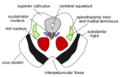 Midbrain at the level of the superior colliculus
 -
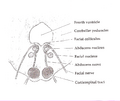 Pons section at facial colliculus
 -
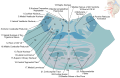 Lower pons horizontal section
 -
 Central tegmental tract


Medical Disclaimer: WikiMD is for informational purposes only and is not a substitute for professional medical advice. Content may be inaccurate or outdated and should not be used for diagnosis or treatment. Always consult your healthcare provider for medical decisions. Verify information with trusted sources such as CDC.gov and NIH.gov. By using this site, you agree that WikiMD is not liable for any outcomes related to its content. See full disclaimer.
Credits:Most images are courtesy of Wikimedia commons, and templates, categories Wikipedia, licensed under CC BY SA or similar.
Translate page: - East Asian
中文,
日本,
한국어,
South Asian
हिन्दी,
தமிழ்,
తెలుగు,
Urdu,
ಕನ್ನಡ,
Southeast Asian
Indonesian,
Vietnamese,
Thai,
မြန်မာဘာသာ,
বাংলা
European
español,
Deutsch,
français,
Greek,
português do Brasil,
polski,
română,
русский,
Nederlands,
norsk,
svenska,
suomi,
Italian
Middle Eastern & African
عربى,
Turkish,
Persian,
Hebrew,
Afrikaans,
isiZulu,
Kiswahili,
Other
Bulgarian,
Hungarian,
Czech,
Swedish,
മലയാളം,
मराठी,
ਪੰਜਾਬੀ,
ગુજરાતી,
Portuguese,
Ukrainian

