Camellia japonica
Camellia japonica is a species of flowering plant in the family Theaceae, native to eastern and southern Asia. It is known for its showy flowers and glossy, dark green leaves.
Description[edit]
Camellia japonica is an evergreen shrub or small tree that can grow up to 11 meters tall. The leaves are glossy, dark green, and leathery, with serrated edges. The flowers, which bloom from winter to spring, are large and showy, with colors ranging from white to pink and red. The fruit is a dry capsule, often with one or two seeds per capsule.
Distribution and habitat[edit]
Camellia japonica is native to eastern and southern Asia, including China, Japan, Korea, and Taiwan. It is typically found in forests, on mountain slopes, and along stream banks. It prefers acidic, well-drained soil and partial shade.
Cultivation[edit]
Camellia japonica has been cultivated for centuries for its ornamental value. It is a popular plant in gardens and landscapes, particularly in regions with a mild, humid climate. It is also commonly grown as a bonsai tree. There are thousands of cultivars available, with a wide range of flower forms and colors.
Uses[edit]
In addition to its ornamental uses, Camellia japonica has several other uses. The seeds are a source of oil, which is used in cooking and cosmetics. The leaves are used to make tea, and the flowers are used in traditional medicine.
Conservation[edit]
While Camellia japonica is not currently considered threatened, it is vulnerable to habitat loss due to deforestation and urbanization. It is also susceptible to several pests and diseases, including camellia petal blight and camellia leaf gall.
See also[edit]

This flora-related article is a stub. You can help WikiMD by expanding it.
-
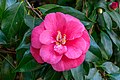 Camellia japonica NBG
 -
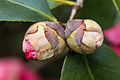 Kamelie Knospe
 -
 Camellia japonica Mt. Nishigatake
 -
 Camellia japonica var. decumbens
 -
 Japanese Camellia bonsai
 -
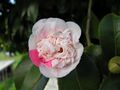 Camelia
 -
 Pillnitz Castle Camellia japonica
 -
 Ezo-nishiki


Medical Disclaimer: WikiMD is for informational purposes only and is not a substitute for professional medical advice. Content may be inaccurate or outdated and should not be used for diagnosis or treatment. Always consult your healthcare provider for medical decisions. Verify information with trusted sources such as CDC.gov and NIH.gov. By using this site, you agree that WikiMD is not liable for any outcomes related to its content. See full disclaimer.
Credits:Most images are courtesy of Wikimedia commons, and templates, categories Wikipedia, licensed under CC BY SA or similar.
Translate page: - East Asian
中文,
日本,
한국어,
South Asian
हिन्दी,
தமிழ்,
తెలుగు,
Urdu,
ಕನ್ನಡ,
Southeast Asian
Indonesian,
Vietnamese,
Thai,
မြန်မာဘာသာ,
বাংলা
European
español,
Deutsch,
français,
Greek,
português do Brasil,
polski,
română,
русский,
Nederlands,
norsk,
svenska,
suomi,
Italian
Middle Eastern & African
عربى,
Turkish,
Persian,
Hebrew,
Afrikaans,
isiZulu,
Kiswahili,
Other
Bulgarian,
Hungarian,
Czech,
Swedish,
മലയാളം,
मराठी,
ਪੰਜਾਬੀ,
ગુજરાતી,
Portuguese,
Ukrainian

