CANDU reactor
CANDU reactor is a type of nuclear reactor designed in Canada, and stands for CANada Deuterium Uranium. It is a type of pressurized heavy water reactor (PHWR) that uses deuterium oxide (heavy water) as its moderator and coolant, and natural uranium as fuel.
Design and Operation[edit]
The CANDU reactor design is unique in that it has two separate water systems: the primary coolant loop and the moderator system. The primary coolant loop, which is under high pressure to prevent boiling, transports heat from the fuel to the steam generator. The moderator system, which is at a lower pressure, slows down neutrons to sustain the nuclear chain reaction.
The fuel used in CANDU reactors is natural uranium, which is not enriched like the uranium used in most other types of reactors. This is possible because of the use of heavy water, which is a more effective moderator than regular water.
Advantages[edit]
One of the main advantages of the CANDU reactor design is its fuel flexibility. In addition to natural uranium, CANDU reactors can also use enriched uranium, mixed-oxide fuel (MOX), and even thorium. This makes CANDU reactors well-suited for countries that do not have access to enrichment facilities.
Another advantage is the ability to refuel the reactor while it is operating. This is known as on-power refuelling, and it allows for continuous operation and a high capacity factor.
Disadvantages[edit]
The main disadvantage of the CANDU design is the high cost of heavy water, which makes up a significant portion of the initial capital cost of the reactor. Additionally, the use of natural uranium fuel results in a higher volume of spent fuel compared to reactors that use enriched uranium.
Safety[edit]
CANDU reactors have several safety features, including a negative void coefficient of reactivity and two independent shutdown systems. The negative void coefficient means that if the coolant water turns into steam (which is less dense), the reaction rate decreases, providing a natural safety mechanism.
CANDU Reactors Around the World[edit]
There are currently 29 CANDU reactors in operation around the world, in countries including Canada, China, India, Pakistan, Argentina, South Korea, and Romania.
See Also[edit]
 | This nuclear physics or atomic physics–related article is a stub. You can help WikiMD by expanding the page. |
-
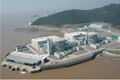 CANDU reactor at Qinshan
 -
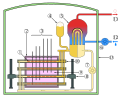 CANDU Reactor Schematic
 -
 CANDU fuel bundles
 -
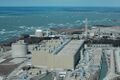 Bruce Nuclear Generating Station
 -
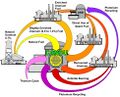 CANDU fuel cycles
 -
 Pickering Nuclear Generating Station
 -
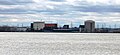 Centrale nucléaire Gentilly


Medical Disclaimer: WikiMD is for informational purposes only and is not a substitute for professional medical advice. Content may be inaccurate or outdated and should not be used for diagnosis or treatment. Always consult your healthcare provider for medical decisions. Verify information with trusted sources such as CDC.gov and NIH.gov. By using this site, you agree that WikiMD is not liable for any outcomes related to its content. See full disclaimer.
Credits:Most images are courtesy of Wikimedia commons, and templates, categories Wikipedia, licensed under CC BY SA or similar.
Translate page: - East Asian
中文,
日本,
한국어,
South Asian
हिन्दी,
தமிழ்,
తెలుగు,
Urdu,
ಕನ್ನಡ,
Southeast Asian
Indonesian,
Vietnamese,
Thai,
မြန်မာဘာသာ,
বাংলা
European
español,
Deutsch,
français,
Greek,
português do Brasil,
polski,
română,
русский,
Nederlands,
norsk,
svenska,
suomi,
Italian
Middle Eastern & African
عربى,
Turkish,
Persian,
Hebrew,
Afrikaans,
isiZulu,
Kiswahili,
Other
Bulgarian,
Hungarian,
Czech,
Swedish,
മലയാളം,
मराठी,
ਪੰਜਾਬੀ,
ગુજરાતી,
Portuguese,
Ukrainian

