Buko salad
Buko Salad is a traditional Filipino dessert that is often served during special occasions and festivities. The main ingredient of this dessert is young coconut (known as "buko" in Filipino), which is combined with a variety of other ingredients to create a sweet and refreshing dish.
Ingredients[edit]
The primary ingredient in Buko Salad is young coconut, which is harvested before it matures. The meat of the young coconut is tender and slightly sweet, making it a perfect base for this dessert. Other common ingredients include condensed milk and heavy cream to add richness and sweetness, and fruit cocktail or a variety of canned or fresh fruits. Some variations of the recipe may also include gelatin or nata de coco (a chewy, translucent, jelly-like foodstuff produced by the fermentation of coconut water) for added texture.
Preparation[edit]
The preparation of Buko Salad is relatively simple. The young coconut is first opened and the meat is scraped out. This is then combined with the other ingredients in a large bowl. The mixture is then chilled in the refrigerator for a few hours before serving, allowing the flavors to meld together.
Variations[edit]
There are many variations of Buko Salad, each with its own unique twist. Some versions may include cheese, corn kernels, or even ube (purple yam). The choice of fruits can also vary widely, with some recipes calling for pineapple, mango, or lychee. The versatility of Buko Salad is part of its charm, as it can be customized to suit individual tastes and preferences.
Cultural Significance[edit]
Buko Salad holds a special place in Filipino culture. It is often served during Christmas, New Year's Eve, and other special occasions. Its sweet and refreshing taste makes it a favorite among both children and adults.
Images[edit]
-
Lychee, mango, macapuno coconut string, nata de coco, jackfruit
-
Buko halo from Koronadal City
-
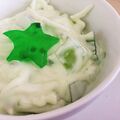 Buko Pandan Salad from Beach House in Costa Pacifica

See Also[edit]
_-_grilled_saba_bananas_-_01.jpg) | This Filipino cuisine–related article is a stub. You can help WikiMD by expanding the page. |
 | This dessert-related article is a stub. You can help WikiMD by expanding the page. |

Medical Disclaimer: WikiMD is for informational purposes only and is not a substitute for professional medical advice. Content may be inaccurate or outdated and should not be used for diagnosis or treatment. Always consult your healthcare provider for medical decisions. Verify information with trusted sources such as CDC.gov and NIH.gov. By using this site, you agree that WikiMD is not liable for any outcomes related to its content. See full disclaimer.
Credits:Most images are courtesy of Wikimedia commons, and templates, categories Wikipedia, licensed under CC BY SA or similar.
Translate page: - East Asian
中文,
日本,
한국어,
South Asian
हिन्दी,
தமிழ்,
తెలుగు,
Urdu,
ಕನ್ನಡ,
Southeast Asian
Indonesian,
Vietnamese,
Thai,
မြန်မာဘာသာ,
বাংলা
European
español,
Deutsch,
français,
Greek,
português do Brasil,
polski,
română,
русский,
Nederlands,
norsk,
svenska,
suomi,
Italian
Middle Eastern & African
عربى,
Turkish,
Persian,
Hebrew,
Afrikaans,
isiZulu,
Kiswahili,
Other
Bulgarian,
Hungarian,
Czech,
Swedish,
മലയാളം,
मराठी,
ਪੰਜਾਬੀ,
ગુજરાતી,
Portuguese,
Ukrainian


