Postcentral gyrus
Postcentral gyrus is a prominent structure in the human brain, located in the parietal lobe. It is the main site of the primary somatosensory cortex, the main sensory receptive area for the sense of touch.
Anatomy[edit]
The postcentral gyrus is located in the posterior region of the frontal lobe, immediately posterior to the central sulcus. It is surrounded by the precentral gyrus to the front, the parietal lobe to the back, and the lateral sulcus to the side.
Function[edit]
The primary function of the postcentral gyrus is to process somatosensory information. It is involved in the detection of touch, proprioception (the sense of the relative position of neighbouring parts of the body), and temperature. Damage to the postcentral gyrus can result in a loss of these sensations.
Clinical significance[edit]
Damage to the postcentral gyrus can result in a condition known as agnosia, which is the inability to recognize objects, persons, sounds, shapes, or smells. Other conditions that can result from damage to this area include astereognosis, which is the inability to identify an object by active touch of the hands without other sensory input, and hemispatial neglect, which is the inability to attend or respond to stimuli in the contralesional visual field.
See also[edit]
References[edit]

This WikiMD article can only be edited by registered and verified editors. You can log in or register.
-
 Postcentral gyrus
 -
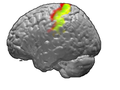 Brodmann areas 1, 2, and 3
 -
 Postcentral gyrus
 -
 Gray's Anatomy illustration of the postcentral gyrus
 -
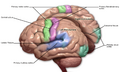 Sensory and motor areas of the brain
 -
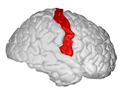 Postcentral gyrus from the DK Atlas
 -
 Postcentral gyrus coronal sections
 -
 Postcentral gyrus sagittal sections
 -
 Postcentral gyrus transversal sections


Medical Disclaimer: WikiMD is for informational purposes only and is not a substitute for professional medical advice. Content may be inaccurate or outdated and should not be used for diagnosis or treatment. Always consult your healthcare provider for medical decisions. Verify information with trusted sources such as CDC.gov and NIH.gov. By using this site, you agree that WikiMD is not liable for any outcomes related to its content. See full disclaimer.
Credits:Most images are courtesy of Wikimedia commons, and templates, categories Wikipedia, licensed under CC BY SA or similar.
Translate page: - East Asian
中文,
日本,
한국어,
South Asian
हिन्दी,
தமிழ்,
తెలుగు,
Urdu,
ಕನ್ನಡ,
Southeast Asian
Indonesian,
Vietnamese,
Thai,
မြန်မာဘာသာ,
বাংলা
European
español,
Deutsch,
français,
Greek,
português do Brasil,
polski,
română,
русский,
Nederlands,
norsk,
svenska,
suomi,
Italian
Middle Eastern & African
عربى,
Turkish,
Persian,
Hebrew,
Afrikaans,
isiZulu,
Kiswahili,
Other
Bulgarian,
Hungarian,
Czech,
Swedish,
മലയാളം,
मराठी,
ਪੰਜਾਬੀ,
ગુજરાતી,
Portuguese,
Ukrainian

