Black Forest ham
Black Forest ham is a type of cured ham that originates from the Black Forest region in Germany. It is known for its distinctive flavor and high-quality ingredients. In this article, we will explore the history, production process, and culinary uses of Black Forest ham.
History[edit]
Black Forest ham has a long history that dates back to the 18th century. It was first produced by farmers in the Black Forest region, who used traditional methods to cure and smoke the ham. The unique climate and dense forests of the region played a significant role in the development of this delicacy.
Production Process[edit]
The production process of Black Forest ham involves several steps to ensure its exceptional taste and quality. First, high-quality pork legs are carefully selected and trimmed. The meat is then seasoned with a mixture of salt, garlic, and various spices, such as juniper berries and coriander.
After the seasoning, the ham is left to cure for several weeks. During this time, the flavors develop, and the meat becomes tender. Once cured, the ham is cold-smoked over fir and pine wood, which gives it the distinct smoky flavor and aroma.
Culinary Uses[edit]
Black Forest ham is a versatile ingredient that can be used in various culinary preparations. It is often enjoyed sliced thinly and served as part of a charcuterie board or in sandwiches. The ham's rich flavor pairs well with a variety of cheeses, bread, and condiments.
In addition to its use in sandwiches, Black Forest ham can also be incorporated into salads, pasta dishes, and quiches. Its smoky and savory taste adds depth to these dishes, making them more flavorful.
Health Benefits[edit]
Black Forest ham is a good source of protein and essential nutrients. It is low in fat and calories compared to other types of cured meats. However, it is important to consume it in moderation due to its high sodium content.
See Also[edit]
References[edit]
-
 Black Forest ham
 -
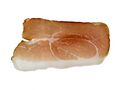 Black Forest ham
 -
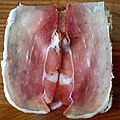 Black Forest ham


Sponsored Health Resource

W8MD Weight Loss, Sleep & MedSpa
Looking for physician-supervised weight loss, semaglutide, tirzepatide, or GLP-1 receptor agonist options? W8MD helps eligible patients in New York City, Brooklyn, New Jersey, Connecticut, Pennsylvania, Delaware, and greater Philadelphia with medical weight loss, sleep medicine, and long-term maintenance support.
GLP-1 specials: Affordable GLP-1 injections NYC and Philadelphia starting from $29.99/week and up for semaglutide with insurance accepted for qualifying visits, and $45/week and up for tirzepatide with insurance accepted for qualifying visits. Self-pay options start from $59.99/week and up for semaglutide and $69.99/week and up for tirzepatide.
Medical weight loss NYC | Affordable GLP-1 injections NYC | Budget GLP-1 weight loss shots Philadelphia | New Jersey medical weight loss | NYC medical weight loss | Philadelphia medical weight loss | Sleep clinic NYC | W8MD's Philadelphia GLP-1 doctor | Weight loss prescriptions NYC
Book a W8MD appointment · View GLP-1 specials
Paid promotional message. Eligibility, pricing, insurance coverage, medication availability, and results vary. Medical evaluation required.

Medical Disclaimer: WikiMD is for informational purposes only and is not a substitute for professional medical advice. Content may be inaccurate or outdated and should not be used for diagnosis or treatment. Always consult your healthcare provider for medical decisions. Verify information with trusted sources such as CDC.gov and NIH.gov. By using this site, you agree that WikiMD is not liable for any outcomes related to its content. See full disclaimer.
Credits:Most images are courtesy of Wikimedia commons, and templates, categories Wikipedia, licensed under CC BY SA or similar.
Translate page: - East Asian
中文,
日本,
한국어,
South Asian
हिन्दी,
தமிழ்,
తెలుగు,
Urdu,
ಕನ್ನಡ,
Southeast Asian
Indonesian,
Vietnamese,
Thai,
မြန်မာဘာသာ,
বাংলা
European
español,
Deutsch,
français,
Greek,
português do Brasil,
polski,
română,
русский,
Nederlands,
norsk,
svenska,
suomi,
Italian
Middle Eastern & African
عربى,
Turkish,
Persian,
Hebrew,
Afrikaans,
isiZulu,
Kiswahili,
Other
Bulgarian,
Hungarian,
Czech,
Swedish,
മലയാളം,
मराठी,
ਪੰਜਾਬੀ,
ગુજરાતી,
Portuguese,
Ukrainian

