Kinilaw
Kinilaw is a traditional Filipino dish, often considered as a type of ceviche. It is made from raw fish or seafood marinated in vinegar or citrus juices, and spiced with chili peppers, onions, garlic, and ginger.
History[edit]
The origins of Kinilaw are believed to date back to pre-colonial times in the Philippines. Early Filipinos used vinegar and salt to preserve their food, and this practice evolved into the preparation of Kinilaw. The dish is mentioned in the earliest known Filipino dictionary, the Vocabulario de la Lengua Tagala (1613), indicating its long-standing presence in Filipino culture.
Preparation[edit]
The primary ingredient in Kinilaw is raw fish, typically tuna or mackerel, although other types of seafood such as shrimp, squid, or clams can also be used. The fish is marinated in vinegar or citrus juices, which "cooks" the fish without heat. This process, known as denaturation, changes the texture and color of the fish, making it firm and opaque.
The marinated fish is then mixed with chopped onions, garlic, ginger, and chili peppers. Some variations of the dish may also include tomatoes, cucumbers, or other vegetables. The dish is typically served cold, often as an appetizer or a side dish.
Variations[edit]
There are many regional variations of Kinilaw in the Philippines. In the Visayas region, for example, Tamilok, a type of woodworm, is used instead of fish. In Davao City, a version of Kinilaw called Sinuglaw combines grilled pork belly with the raw fish.
Cultural significance[edit]
Kinilaw is more than just a dish in the Philippines; it is a part of the country's cultural and culinary identity. It is often served during special occasions and gatherings, and is a common fare in beach outings and picnics.
See also[edit]

-
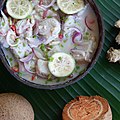 Kinilaw
 -
 Tabon-tabon, a native fruit used for kinilaw
 -
 Kinilaw
 -
 Kinilaw
 -
 Kinilaw
 -
 Kinilaw
 -
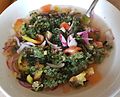 Kinilaw
 -
 Kinilaw
 -
 Kinilaw
 -
 Kinilaw
 -
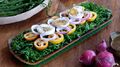 Kinilaw


.jpg)


_-_Philippines_2.jpg)

.jpg)
.jpg)


Medical Disclaimer: WikiMD is for informational purposes only and is not a substitute for professional medical advice. Content may be inaccurate or outdated and should not be used for diagnosis or treatment. Always consult your healthcare provider for medical decisions. Verify information with trusted sources such as CDC.gov and NIH.gov. By using this site, you agree that WikiMD is not liable for any outcomes related to its content. See full disclaimer.
Credits:Most images are courtesy of Wikimedia commons, and templates, categories Wikipedia, licensed under CC BY SA or similar.
Translate page: - East Asian
中文,
日本,
한국어,
South Asian
हिन्दी,
தமிழ்,
తెలుగు,
Urdu,
ಕನ್ನಡ,
Southeast Asian
Indonesian,
Vietnamese,
Thai,
မြန်မာဘာသာ,
বাংলা
European
español,
Deutsch,
français,
Greek,
português do Brasil,
polski,
română,
русский,
Nederlands,
norsk,
svenska,
suomi,
Italian
Middle Eastern & African
عربى,
Turkish,
Persian,
Hebrew,
Afrikaans,
isiZulu,
Kiswahili,
Other
Bulgarian,
Hungarian,
Czech,
Swedish,
മലയാളം,
मराठी,
ਪੰਜਾਬੀ,
ગુજરાતી,
Portuguese,
Ukrainian

