Big band
Big band refers to a type of musical ensemble that originated in the United States and became popular during the Swing Era from the 1930s until the late 1940s. Big bands typically consist of 10 or more musicians, divided into four sections: saxophones, trumpets, trombones, and a rhythm section.
History[edit]
The big band format was developed in the 1920s but reached its peak in the 1930s and 1940s, a period known as the Swing Era. During this time, big bands were the primary form of popular music in the United States and were associated with ballroom dancing. Some of the most famous big band leaders of this era include Duke Ellington, Count Basie, and Glenn Miller.
Structure[edit]
A big band typically consists of 10 to 25 musicians, divided into four sections. The saxophone section usually includes two altos, two tenors, and a baritone. The trumpet section and trombone section each typically have three to four players. The rhythm section includes a drummer, a bassist, a pianist, and sometimes a guitarist.
Style[edit]
Big band music is characterized by its strong, driving rhythm, intricate brass and woodwind arrangements, and solo improvisations. The style is closely associated with swing music, but big bands have also played in a variety of other styles, including bebop, cool jazz, and fusion.
Legacy[edit]
While the popularity of big bands declined after the 1940s, they have continued to exist and evolve. Today, big bands play a variety of music, from traditional swing to more contemporary styles. They are a staple of jazz education programs and continue to be a popular choice for live music at dances and special events.
See also[edit]
 | This music-related article is a stub. You can help WikiMD by expanding the page. |
Big band gallery[edit]
-
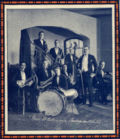 Whiteman band 1921
 -
 US Navy Band Northwest Big Band "Cascade"
 -
 Jazz ensemble seating diagram
 -
 Ockbrook Band Pride Park
 -
 Benny Goodman and Band Stage Door Canteen
 -
 Glen Miller
 -
 Grand Central Big Band
 -
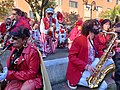 HONK! 2022 performers

_Big_Band,_%22Cascade%22,_plays_%22Holly_and_the_Ivy_-_God_Rest_Ye_Merry_Gentlemen%22_at_the_%22Holly,_Jolly_Holiday%22_concert_held_in_Parker_Hall_of_Oak_Harbor_High_School.jpg)


Medical Disclaimer: WikiMD is for informational purposes only and is not a substitute for professional medical advice. Content may be inaccurate or outdated and should not be used for diagnosis or treatment. Always consult your healthcare provider for medical decisions. Verify information with trusted sources such as CDC.gov and NIH.gov. By using this site, you agree that WikiMD is not liable for any outcomes related to its content. See full disclaimer.
Credits:Most images are courtesy of Wikimedia commons, and templates, categories Wikipedia, licensed under CC BY SA or similar.
Translate this page: - East Asian
中文,
日本,
한국어,
South Asian
हिन्दी,
தமிழ்,
తెలుగు,
Urdu,
ಕನ್ನಡ,
Southeast Asian
Indonesian,
Vietnamese,
Thai,
မြန်မာဘာသာ,
বাংলা
European
español,
Deutsch,
français,
Greek,
português do Brasil,
polski,
română,
русский,
Nederlands,
norsk,
svenska,
suomi,
Italian
Middle Eastern & African
عربى,
Turkish,
Persian,
Hebrew,
Afrikaans,
isiZulu,
Kiswahili,
Other
Bulgarian,
Hungarian,
Czech,
Swedish,
മലയാളം,
मराठी,
ਪੰਜਾਬੀ,
ગુજરાતી,
Portuguese,
Ukrainian
