Barium chloride
Barium chloride is an inorganic compound with the formula BaCl2. It is one of the most common water-soluble salts of barium. Like most other barium salts, it is white, toxic, and imparts a yellow-green coloration to a flame. It is also hygroscopic, converting first to the dihydrate BaCl2(H2O)2. Barium chloride has a variety of applications in the laboratory and industry.
Properties[edit]
Barium chloride exists in an anhydrous form, as well as a dihydrate (BaCl2·2H2O). The anhydrous form is a white solid that is highly soluble in water, and it readily absorbs moisture from the air, forming the dihydrate. Barium chloride is toxic, with exposure potentially causing severe health effects, including muscle paralysis and affects on the nervous system. The compound burns with a yellow-green coloration, which is a characteristic test for barium.
Production[edit]
Barium chloride is produced mainly from barite (barium sulfate, BaSO4) by a two-step process. Initially, barite is converted into barium sulfide (BaS) by carbothermal reduction (heating with coke). In the second step, barium sulfide is treated with hydrochloric acid (HCl), yielding barium chloride and hydrogen sulfide (H2S) gas.
Applications[edit]
Barium chloride is used in a variety of applications including:
- In the manufacture of pigments, and in the production of other barium salts.
- As a flux in the metallurgical industry to remove impurities from steel and cast iron.
- In fireworks to produce a bright green color.
- In the laboratory, barium chloride is used as a test for sulfate ions. When barium chloride solution is added to a solution containing sulfate ions, a white precipitate of barium sulfate forms, indicating the presence of sulfate.
Safety[edit]
Barium chloride is highly toxic. Ingestion, inhalation, or skin contact can lead to serious health effects, including muscle paralysis and possibly death. Safety precautions include using personal protective equipment, working in a well-ventilated area, and proper storage to avoid moisture uptake.
Environmental Impact[edit]
Barium compounds, including barium chloride, can have adverse effects on the environment. They can contaminate water and soil, posing risks to aquatic and terrestrial life. Proper disposal and handling are necessary to minimize environmental impact.

-
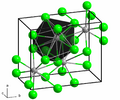 Cotunnite structure
 -
Barium chloride


Medical Disclaimer: WikiMD is for informational purposes only and is not a substitute for professional medical advice. Content may be inaccurate or outdated and should not be used for diagnosis or treatment. Always consult your healthcare provider for medical decisions. Verify information with trusted sources such as CDC.gov and NIH.gov. By using this site, you agree that WikiMD is not liable for any outcomes related to its content. See full disclaimer.
Credits:Most images are courtesy of Wikimedia commons, and templates, categories Wikipedia, licensed under CC BY SA or similar.
Translate page: - East Asian
中文,
日本,
한국어,
South Asian
हिन्दी,
தமிழ்,
తెలుగు,
Urdu,
ಕನ್ನಡ,
Southeast Asian
Indonesian,
Vietnamese,
Thai,
မြန်မာဘာသာ,
বাংলা
European
español,
Deutsch,
français,
Greek,
português do Brasil,
polski,
română,
русский,
Nederlands,
norsk,
svenska,
suomi,
Italian
Middle Eastern & African
عربى,
Turkish,
Persian,
Hebrew,
Afrikaans,
isiZulu,
Kiswahili,
Other
Bulgarian,
Hungarian,
Czech,
Swedish,
മലയാളം,
मराठी,
ਪੰਜਾਬੀ,
ગુજરાતી,
Portuguese,
Ukrainian


