Infant


Infancy is the earliest stage of human life, beginning at birth and extending until approximately one year of age. An infant (from Latin infans, meaning 'baby' or 'child') refers to a very young offspring of a human, typically under one year of age. In medical terminology, an infant is considered a neonate for the first 28 days of life. This stage is critical for physical, cognitive, emotional, and social development, as well as the establishment of essential survival reflexes and feeding behaviors.
Definition and Classification[edit]
Infancy is often divided into the following stages:
- Neonatal period: Birth to 28 days (4 weeks) of life.
- Early infancy: 1 to 6 months.
- Late infancy: 6 to 12 months.
- Toddlerhood: Begins around 12 months as the infant transitions into early childhood.
Growth and Development[edit]
Infants experience rapid growth and significant developmental changes in the first year of life. These changes occur across several domains:
Physical Growth[edit]
- Birth weight typically doubles by 5 months and triples by 12 months.
- Height increases by about 50% in the first year.
- Head circumference grows rapidly, reflecting brain development.
- The fontanelles (soft spots on the skull) begin to close by 18 months.
Neurological Development[edit]
- Brain growth is most rapid in infancy, with synaptogenesis and myelination facilitating neural connections.
- Reflexes present at birth:
- Moro reflex (startle reflex) – disappears by 3-6 months.
- Rooting reflex (turning toward touch on cheek) – disappears by 4 months.
- Palmar grasp reflex (gripping an object placed in hand) – disappears by 4-6 months.
- Babinski reflex (toes fan outward when sole is stroked) – disappears by 12 months.
Motor Development[edit]
Milestones in gross motor and fine motor skills include:
- 1 month – Lifts head briefly while prone.
- 3 months – Holds head steady, tracks objects.
- 6 months – Rolls over, sits with support.
- 9 months – Crawls, pulls to stand.
- 12 months – Begins walking with support.
Sensory and Cognitive Development[edit]
- Vision is blurry at birth but improves by 3-4 months.
- Recognizes faces and voices within the first few months.
- Object permanence develops by 8-12 months.
- By 12 months, infants start imitating gestures and simple problem-solving.
Social and Emotional Development[edit]
- Infants form attachment to caregivers, showing preference for primary caregivers by 6 months.
- Stranger anxiety typically emerges around 6-8 months.
- Separation anxiety peaks between 9-12 months.
- By 12 months, infants express basic emotions such as joy, fear, and distress.
Nutrition[edit]
Proper nutrition is essential for growth and immune function. Recommendations include:
- Exclusive breastfeeding for the first 6 months, as recommended by the World Health Organization (WHO).
- If breastfeeding is not possible, infant formula is used.
- Introduction of complementary foods begins at 6 months (e.g., iron-rich pureed foods).
- Whole milk is introduced after 12 months.
Immunization[edit]
Infants receive a series of vaccinations to protect against infectious diseases. Common vaccines include:
- Birth – Hepatitis B vaccine.
- 2, 4, 6 months – DTaP (diphtheria, tetanus, pertussis), Hib (Haemophilus influenzae type B), IPV (inactivated poliovirus), PCV (pneumococcal vaccine), Rotavirus vaccine.
- 6-12 months – Influenza vaccine.
- 12 months – MMR vaccine (measles, mumps, rubella), Varicella vaccine.
Common Health Concerns[edit]
Infants are vulnerable to various medical conditions, including:
- Neonatal jaundice – Common in newborns due to immature liver function.
- Colic – Unexplained excessive crying, typically resolving by 3-4 months.
- Sudden Infant Death Syndrome (SIDS) – Risk is reduced by placing infants on their back to sleep.
- Respiratory infections – More common due to immature immune systems.
- Teething – Begins around 6 months and may cause irritability.
Infant Care and Parenting[edit]
- Safe sleep – Infants should sleep on their back in a crib with a firm mattress to reduce SIDS risk.
- Bonding and attachment – Responsive caregiving fosters secure attachment.
- Play and stimulation – Encourages cognitive and motor development.
- Infant hygiene – Regular diaper changes, gentle bathing, and umbilical cord care.
Gallery[edit]
-
Infant
-
Infant
-
Infant
-
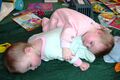 Being a twin means you always have a pillow or blanket handy
 -
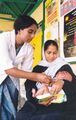 Baby immunization


See Also[edit]
| Childhood | ||||||||||
|---|---|---|---|---|---|---|---|---|---|---|
This Childhood related article is a stub.
|
Sponsored Health Resource

W8MD Weight Loss, Sleep & MedSpa
Looking for physician-supervised weight loss, semaglutide, tirzepatide, or GLP-1 receptor agonist options? W8MD helps eligible patients in New York City, Brooklyn, New Jersey, Connecticut, Pennsylvania, Delaware, and greater Philadelphia with medical weight loss, sleep medicine, and long-term maintenance support.
GLP-1 specials: Affordable GLP-1 injections NYC and Philadelphia starting from $29.99/week and up for semaglutide with insurance accepted for qualifying visits, and $45/week and up for tirzepatide with insurance accepted for qualifying visits. Self-pay options start from $59.99/week and up for semaglutide and $69.99/week and up for tirzepatide.
Medical weight loss NYC | Affordable GLP-1 injections NYC | Budget GLP-1 weight loss shots Philadelphia | New Jersey medical weight loss | NYC medical weight loss | Philadelphia medical weight loss | Sleep clinic NYC | W8MD's Philadelphia GLP-1 doctor | Weight loss prescriptions NYC
Book a W8MD appointment · View GLP-1 specials
Paid promotional message. Eligibility, pricing, insurance coverage, medication availability, and results vary. Medical evaluation required.

Medical Disclaimer: WikiMD is for informational purposes only and is not a substitute for professional medical advice. Content may be inaccurate or outdated and should not be used for diagnosis or treatment. Always consult your healthcare provider for medical decisions. Verify information with trusted sources such as CDC.gov and NIH.gov. By using this site, you agree that WikiMD is not liable for any outcomes related to its content. See full disclaimer.
Credits:Most images are courtesy of Wikimedia commons, and templates, categories Wikipedia, licensed under CC BY SA or similar.
Translate page: - East Asian
中文,
日本,
한국어,
South Asian
हिन्दी,
தமிழ்,
తెలుగు,
Urdu,
ಕನ್ನಡ,
Southeast Asian
Indonesian,
Vietnamese,
Thai,
မြန်မာဘာသာ,
বাংলা
European
español,
Deutsch,
français,
Greek,
português do Brasil,
polski,
română,
русский,
Nederlands,
norsk,
svenska,
suomi,
Italian
Middle Eastern & African
عربى,
Turkish,
Persian,
Hebrew,
Afrikaans,
isiZulu,
Kiswahili,
Other
Bulgarian,
Hungarian,
Czech,
Swedish,
മലയാളം,
मराठी,
ਪੰਜਾਬੀ,
ગુજરાતી,
Portuguese,
Ukrainian


.jpg)
.jpg)

.jpg)
