Cuneonavicular joint
Cuneonavicular joint is a type of joint found in the human foot. It is formed by the articulation of the cuneiform bones and the navicular bone.
Etymology[edit]
The term "cuneonavicular" is derived from the Latin words "cuneus" meaning wedge and "navicularis" meaning boat-shaped. This is in reference to the shapes of the cuneiform and navicular bones that form the joint.
Anatomy[edit]
The cuneonavicular joint is a synovial joint, which means it is filled with synovial fluid that helps in reducing friction and providing cushioning during movement. It is located in the midfoot region, between the three cuneiform bones (medial, intermediate, and lateral) and the navicular bone.
The joint is surrounded by a fibrous joint capsule that is lined with a synovial membrane. The joint capsule is strengthened by the dorsal cuneonavicular ligament, plantar cuneonavicular ligament, and the interosseous cuneonavicular ligament.
Function[edit]
The cuneonavicular joint plays a crucial role in foot mobility, particularly in movements such as inversion and eversion. It also contributes to the stability of the foot and helps in distributing body weight during standing and walking.
Related Terms[edit]
- Cuneiform bones
- Navicular bone
- Synovial joint
- Joint capsule
- Dorsal cuneonavicular ligament
- Plantar cuneonavicular ligament
- Interosseous cuneonavicular ligament
See Also[edit]

This WikiMD article can only be edited by registered and verified editors. You can log in or register.
-
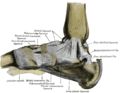 Gray354


Medical Disclaimer: WikiMD is for informational purposes only and is not a substitute for professional medical advice. Content may be inaccurate or outdated and should not be used for diagnosis or treatment. Always consult your healthcare provider for medical decisions. Verify information with trusted sources such as CDC.gov and NIH.gov. By using this site, you agree that WikiMD is not liable for any outcomes related to its content. See full disclaimer.
Credits:Most images are courtesy of Wikimedia commons, and templates, categories Wikipedia, licensed under CC BY SA or similar.
Translate page: - East Asian
中文,
日本,
한국어,
South Asian
हिन्दी,
தமிழ்,
తెలుగు,
Urdu,
ಕನ್ನಡ,
Southeast Asian
Indonesian,
Vietnamese,
Thai,
မြန်မာဘာသာ,
বাংলা
European
español,
Deutsch,
français,
Greek,
português do Brasil,
polski,
română,
русский,
Nederlands,
norsk,
svenska,
suomi,
Italian
Middle Eastern & African
عربى,
Turkish,
Persian,
Hebrew,
Afrikaans,
isiZulu,
Kiswahili,
Other
Bulgarian,
Hungarian,
Czech,
Swedish,
മലയാളം,
मराठी,
ਪੰਜਾਬੀ,
ગુજરાતી,
Portuguese,
Ukrainian

