Ascending aorta
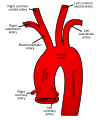
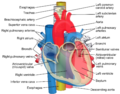
The ascending aorta is a major part of the human cardiovascular system. It is the initial section of the aorta, the largest artery in the body, which carries oxygenated blood from the heart to the rest of the body.
Anatomy[edit]
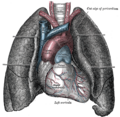
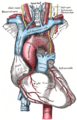
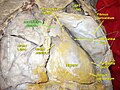
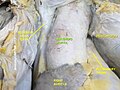
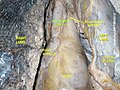
The ascending aorta begins at the upper part of the left ventricle of the heart. It extends upward and bends to form the aortic arch. The ascending aorta is approximately 5 cm in diameter and 5 cm in length. It is located in the mediastinum, the central compartment of the thoracic cavity.
Function[edit]
The primary function of the ascending aorta is to carry oxygen-rich blood from the left ventricle to the rest of the body. It does this by branching into the coronary arteries, which supply blood to the heart muscle, and the aortic arch, which carries blood to the head, neck, and upper body.
Clinical significance[edit]
Diseases of the ascending aorta can be life-threatening and include aortic aneurysm, aortic dissection, and aortic stenosis. These conditions can lead to complications such as heart failure, stroke, and even death if not promptly diagnosed and treated.
See also[edit]
References[edit]

-
 Ascending_aorta
 -
 Ascending_aorta
 -
 Ascending_aorta
 -
 Ascending_aorta
 -
 Ascending_aorta
 -
 Ascending_aorta
 -
 Ascending_aorta
 -
 Ascending_aorta
 -
 Ascending_aorta
 -
 Ascending_aorta
 -
 Ascending_aorta
 -
 Ascending_aorta


Medical Disclaimer: WikiMD is for informational purposes only and is not a substitute for professional medical advice. Content may be inaccurate or outdated and should not be used for diagnosis or treatment. Always consult your healthcare provider for medical decisions. Verify information with trusted sources such as CDC.gov and NIH.gov. By using this site, you agree that WikiMD is not liable for any outcomes related to its content. See full disclaimer.
Credits:Most images are courtesy of Wikimedia commons, and templates, categories Wikipedia, licensed under CC BY SA or similar.
Translate page: - East Asian
中文,
日本,
한국어,
South Asian
हिन्दी,
தமிழ்,
తెలుగు,
Urdu,
ಕನ್ನಡ,
Southeast Asian
Indonesian,
Vietnamese,
Thai,
မြန်မာဘာသာ,
বাংলা
European
español,
Deutsch,
français,
Greek,
português do Brasil,
polski,
română,
русский,
Nederlands,
norsk,
svenska,
suomi,
Italian
Middle Eastern & African
عربى,
Turkish,
Persian,
Hebrew,
Afrikaans,
isiZulu,
Kiswahili,
Other
Bulgarian,
Hungarian,
Czech,
Swedish,
മലയാളം,
मराठी,
ਪੰਜਾਬੀ,
ગુજરાતી,
Portuguese,
Ukrainian

