Alstonia constricta

| Alstonia constricta | |
|---|---|
| Alstonia constricta | |
| Scientific classification | |
| Kingdom | |
| Phylum | |
| Class | |
| Order | |
| Family | |
| Genus | Alstonia |
| Species | constricta |
| Binomial name | Alstonia constricta |
| Binomial authority | |
| Synonyms | |
Alstonia constricta, commonly known as the Bitterbark or Bitterbark tree, is a species of small tree or shrub in the family Apocynaceae. It is native to Australia, specifically found in the regions of Queensland, New South Wales, and Northern Territory.
Description[edit]
Alstonia constricta typically grows to a height of 3 to 10 meters. The tree has a distinctive greyish-brown bark that is deeply furrowed. The leaves are arranged in whorls and are narrow, lance-shaped, and leathery. The flowers are small, white, and fragrant, appearing in clusters. The fruit is a long, slender follicle containing numerous seeds.
Habitat[edit]
This species is commonly found in woodland and open forest environments, often on sandy or rocky soils. It is well adapted to dry conditions and can often be found in areas with low rainfall.
Uses[edit]
Alstonia constricta has been traditionally used in Aboriginal Australian medicine. The bark contains alkaloids that have been used for their medicinal properties, particularly as a febrifuge and tonic. The bitter taste of the bark is due to these alkaloids.
Cultivation[edit]
The tree is not commonly cultivated but can be grown from seed. It prefers well-drained soils and a sunny position. It is relatively drought-tolerant once established.
Conservation Status[edit]
The conservation status of Alstonia constricta is not currently listed as threatened. However, habitat destruction and changes in land use could potentially impact local populations.
Gallery[edit]
-
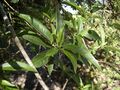 Leaves of Alstonia constricta

See also[edit]
References[edit]
 | This Apocynaceae article is a stub. You can help WikiMD by expanding the page. |

Medical Disclaimer: WikiMD is for informational purposes only and is not a substitute for professional medical advice. Content may be inaccurate or outdated and should not be used for diagnosis or treatment. Always consult your healthcare provider for medical decisions. Verify information with trusted sources such as CDC.gov and NIH.gov. By using this site, you agree that WikiMD is not liable for any outcomes related to its content. See full disclaimer.
Credits:Most images are courtesy of Wikimedia commons, and templates, categories Wikipedia, licensed under CC BY SA or similar.
Translate page: - East Asian
中文,
日本,
한국어,
South Asian
हिन्दी,
தமிழ்,
తెలుగు,
Urdu,
ಕನ್ನಡ,
Southeast Asian
Indonesian,
Vietnamese,
Thai,
မြန်မာဘာသာ,
বাংলা
European
español,
Deutsch,
français,
Greek,
português do Brasil,
polski,
română,
русский,
Nederlands,
norsk,
svenska,
suomi,
Italian
Middle Eastern & African
عربى,
Turkish,
Persian,
Hebrew,
Afrikaans,
isiZulu,
Kiswahili,
Other
Bulgarian,
Hungarian,
Czech,
Swedish,
മലയാളം,
मराठी,
ਪੰਜਾਬੀ,
ગુજરાતી,
Portuguese,
Ukrainian

