Ajanta Caves
.jpg)


The Ajanta Caves are a group of 30 rock-cut Buddhist cave monuments which date from the 2nd century BCE to about 480 CE in Aurangabad district, Maharashtra, India. They have been designated as a UNESCO World Heritage Site and are universally recognized as masterpieces of Buddhist religious art. The caves are celebrated not only for their historical significance but also for their intricate sculptures and paintings which are considered among the finest surviving examples of ancient Indian art.
Location and Discovery[edit]
Located in a panoramic cliff along the Waghora River, the caves were used by Buddhist monks as prayer halls (Chaitya Grihas) and monasteries (Vihara) for about nine centuries, then abruptly abandoned. They were rediscovered in 1819 by a British officer in the Madras Army, John Smith, during a hunting expedition.
Architecture[edit]
The Ajanta Caves are carved into the mountain face, and their layout and architecture reflect the Vakataka and Satavahana styles of the period. The caves include two types of architecture: the Chaityas, or prayer halls, and the Viharas, or monastic quarters. Each cave was carved meticulously by hand using only simple tools like chisels and hammers.
Artwork and Sculptures[edit]
The walls of the caves are adorned with elaborate frescoes that depict various Jataka tales — stories of the Buddha's past lives — as well as scenes from everyday life. These paintings are notable for their vibrant colors, which were derived from natural minerals and plants, and for their expressive qualities, which convey emotions through detailed gestures, poses, and forms.
The sculptures within the caves are equally remarkable, ranging from large, detailed statues of the Buddha in various poses to intricate carvings of animals and mythological beings. The art of Ajanta has influenced Buddhist art in other regions of Asia, carrying its aesthetic and religious messages far beyond its geographic origins.
Preservation and Challenges[edit]
The caves have faced several preservation challenges over the centuries, from natural decay to human interference. Efforts by the Archaeological Survey of India and various international organizations have been pivotal in preserving these artworks for future generations. However, the caves continue to face threats from environmental factors and tourism pressures.
Significance[edit]
The Ajanta Caves are significant not only for their artistic and architectural achievements but also for the light they shed on the life and times of the period in which they were created. They provide profound insights into the cultural and historical context of Buddhism in India and contribute to our understanding of early Indian civilization.
Gallery[edit]
-
 View of the Ajanta caves
 -

-
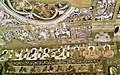 Entrance of cave 17
 -
 A fresco from one of the caves at Ajanta
 -
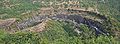 Caves from aerial view
 -
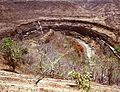 Tal im Überblick
 -
 Outline of Ajanta Cave 1 (Vihara/monastery)
 -
 Höhle 1
 -
 Ajanta-Höhlen: Detail
 -


External links[edit]
| This article is a stub. You can help WikiMD by registering to expand it. |
Medical Disclaimer: WikiMD is for informational purposes only and is not a substitute for professional medical advice. Content may be inaccurate or outdated and should not be used for diagnosis or treatment. Always consult your healthcare provider for medical decisions. Verify information with trusted sources such as CDC.gov and NIH.gov. By using this site, you agree that WikiMD is not liable for any outcomes related to its content. See full disclaimer.
Credits:Most images are courtesy of Wikimedia commons, and templates, categories Wikipedia, licensed under CC BY SA or similar.
Translate this page: - East Asian
中文,
日本,
한국어,
South Asian
हिन्दी,
தமிழ்,
తెలుగు,
Urdu,
ಕನ್ನಡ,
Southeast Asian
Indonesian,
Vietnamese,
Thai,
မြန်မာဘာသာ,
বাংলা
European
español,
Deutsch,
français,
Greek,
português do Brasil,
polski,
română,
русский,
Nederlands,
norsk,
svenska,
suomi,
Italian
Middle Eastern & African
عربى,
Turkish,
Persian,
Hebrew,
Afrikaans,
isiZulu,
Kiswahili,
Other
Bulgarian,
Hungarian,
Czech,
Swedish,
മലയാളം,
मराठी,
ਪੰਜਾਬੀ,
ગુજરાતી,
Portuguese,
Ukrainian
- 2nd-century BC establishments
- 1819 archaeological discoveries
- Architecture in India
- Indian art
- Indian painting
- Buddhist pilgrimage sites in India
- Caves of Maharashtra
- World Heritage Sites in Maharashtra
- Caves containing pictograms in India
- Former populated places in India
- Tourist attractions in Aurangabad district, Maharashtra
- Indian rock-cut architecture
- Buddhist caves in India
- Buddhist paintings
- Gupta art
- Indian Buddhist sculpture
- World Heritage Sites in India
- Vakataka dynasty
