Advanced Open Water Diver
A certification level in recreational scuba diving
Advanced Open Water Diver is a recreational scuba diving certification level provided by several diver training agencies, including PADI, SSI, and others. This certification is designed to advance a diver's skills beyond the basic Open Water Diver level, allowing them to dive deeper and explore more challenging environments.
Certification Requirements[edit]
To obtain the Advanced Open Water Diver certification, divers must complete a series of specialty dives. These typically include a deep dive and an underwater navigation dive, along with three additional dives chosen from a list of specialties such as night diving, wreck diving, or underwater photography.
Deep Dive[edit]
The deep dive component of the course allows divers to explore depths beyond the 18 meters (60 feet) limit of the Open Water Diver certification. This dive typically takes place at a depth of up to 30 meters (100 feet), where divers learn about the effects of increased pressure and nitrogen narcosis.
[edit]
The underwater navigation dive teaches divers how to use a compass and natural navigation techniques to find their way underwater. This skill is crucial for planning and executing dives safely.
Elective Dives[edit]
Divers can choose from a variety of elective dives to complete their certification. Popular options include:
Training Agencies[edit]
Several training agencies offer the Advanced Open Water Diver certification, each with its own specific requirements and course structure. The most prominent agencies include:
Benefits of Certification[edit]
Achieving the Advanced Open Water Diver certification allows divers to:
- Dive to greater depths, typically up to 30 meters (100 feet).
- Gain confidence and experience in a variety of diving conditions.
- Access more challenging dive sites that require advanced skills.
Related pages[edit]
Gallery[edit]
-
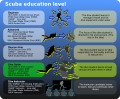 Scuba education levels
 -
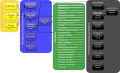 PADI training system


Advanced Open Water Diver[edit]

Medical Disclaimer: WikiMD is for informational purposes only and is not a substitute for professional medical advice. Content may be inaccurate or outdated and should not be used for diagnosis or treatment. Always consult your healthcare provider for medical decisions. Verify information with trusted sources such as CDC.gov and NIH.gov. By using this site, you agree that WikiMD is not liable for any outcomes related to its content. See full disclaimer.
Credits:Most images are courtesy of Wikimedia commons, and templates, categories Wikipedia, licensed under CC BY SA or similar.
Translate page: - East Asian
中文,
日本,
한국어,
South Asian
हिन्दी,
தமிழ்,
తెలుగు,
Urdu,
ಕನ್ನಡ,
Southeast Asian
Indonesian,
Vietnamese,
Thai,
မြန်မာဘာသာ,
বাংলা
European
español,
Deutsch,
français,
Greek,
português do Brasil,
polski,
română,
русский,
Nederlands,
norsk,
svenska,
suomi,
Italian
Middle Eastern & African
عربى,
Turkish,
Persian,
Hebrew,
Afrikaans,
isiZulu,
Kiswahili,
Other
Bulgarian,
Hungarian,
Czech,
Swedish,
മലയാളം,
मराठी,
ਪੰਜਾਬੀ,
ગુજરાતી,
Portuguese,
Ukrainian

