Actaea spicata
Actaea spicata, commonly known as baneberry or herb Christopher, is a species of flowering plant in the family Ranunculaceae. It is native to Europe and Asia, where it grows in shady and moist habitats, such as woodlands and forest edges.
Description[edit]
Actaea spicata is a perennial herbaceous plant that typically grows to a height of 30-60 cm. The plant has a rhizomatous root system and produces erect, branched stems. The leaves are large, bipinnate, and have a distinctive toothed margin. The flowers are small, white, and arranged in a dense, elongated cluster known as a raceme. The fruit is a shiny black berry, which is toxic to humans and animals if ingested.
Habitat and Distribution[edit]
Actaea spicata is found in a variety of habitats across its range, including deciduous forests, mixed forests, and shrublands. It prefers moist, well-drained soils and is often found in shaded or semi-shaded locations. The species is distributed throughout Europe, from the British Isles to Russia, and extends into parts of Asia, including Siberia and the Himalayas.
Toxicity[edit]
The berries of Actaea spicata contain toxic compounds that can cause severe gastrointestinal distress, including nausea, vomiting, and diarrhea, if ingested. The plant also contains irritant chemicals that can cause skin irritation upon contact. Due to its toxicity, it is important to handle the plant with care and to avoid ingestion of any part of the plant.
Uses[edit]
Despite its toxicity, Actaea spicata has been used in traditional medicine for various purposes. Extracts from the plant have been used to treat rheumatism, gout, and other inflammatory conditions. However, due to the potential for toxicity, such uses are not recommended without proper medical supervision.
Conservation Status[edit]
Actaea spicata is not currently listed as a threatened species. However, like many woodland plants, it may be susceptible to habitat loss and degradation due to human activities such as deforestation and land development.
Gallery[edit]
-
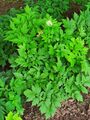 Actaea spicata in bloom
 -
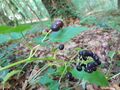 Toxic berries of Actaea spicata


See also[edit]
References[edit]
 | This Ranunculaceae article is a stub. You can help WikiMD by expanding the page. |

Medical Disclaimer: WikiMD is for informational purposes only and is not a substitute for professional medical advice. Content may be inaccurate or outdated and should not be used for diagnosis or treatment. Always consult your healthcare provider for medical decisions. Verify information with trusted sources such as CDC.gov and NIH.gov. By using this site, you agree that WikiMD is not liable for any outcomes related to its content. See full disclaimer.
Credits:Most images are courtesy of Wikimedia commons, and templates, categories Wikipedia, licensed under CC BY SA or similar.
Translate page: - East Asian
中文,
日本,
한국어,
South Asian
हिन्दी,
தமிழ்,
తెలుగు,
Urdu,
ಕನ್ನಡ,
Southeast Asian
Indonesian,
Vietnamese,
Thai,
မြန်မာဘာသာ,
বাংলা
European
español,
Deutsch,
français,
Greek,
português do Brasil,
polski,
română,
русский,
Nederlands,
norsk,
svenska,
suomi,
Italian
Middle Eastern & African
عربى,
Turkish,
Persian,
Hebrew,
Afrikaans,
isiZulu,
Kiswahili,
Other
Bulgarian,
Hungarian,
Czech,
Swedish,
മലയാളം,
मराठी,
ਪੰਜਾਬੀ,
ગુજરાતી,
Portuguese,
Ukrainian


