Academic dishonesty

Academic dishonesty refers to various forms of cheating that occur in relation to a formal academic exercise. It can include plagiarism, fabrication, deception, cheating, and bribery. Academic dishonesty is a significant issue in educational institutions and can undermine the integrity of academic qualifications.
Types of Academic Dishonesty[edit]
Plagiarism[edit]
Plagiarism is the act of using someone else's work, ideas, or expressions without proper acknowledgment. It is considered a serious violation of academic integrity. Plagiarism can occur in various forms, such as copying text, using someone else's research, or presenting another person's ideas as one's own.
Fabrication[edit]
Fabrication involves inventing or falsifying information, data, or citations in an academic exercise. This can include making up data for a research project or altering results to fit a desired outcome.
Deception[edit]
Deception in an academic context involves providing false information to an instructor concerning a formal academic exercise. This can include giving a false excuse for missing a deadline or lying about the reasons for needing an extension.
Cheating[edit]
Cheating is the act of using unauthorized materials, information, or study aids in any academic exercise. This can include copying from another student during an exam, using cheat sheets, or obtaining exam questions in advance.
Bribery[edit]
Bribery involves offering money or other incentives to someone in a position of authority to gain an academic advantage. This can include paying someone to take an exam on one's behalf or offering gifts to an instructor for a better grade.
Consequences of Academic Dishonesty[edit]
Academic dishonesty can have severe consequences for students, including academic penalties, suspension, or expulsion from an institution. It can also damage a student's reputation and future career prospects. Institutions often have strict policies and procedures in place to address and prevent academic dishonesty.
Prevention and Education[edit]
Educational institutions employ various strategies to prevent academic dishonesty, including promoting academic integrity, using plagiarism detection software, and educating students about the importance of honesty in academia. Faculty members play a crucial role in fostering an environment of trust and integrity.
Related Pages[edit]
Gallery[edit]
-
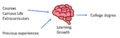 Learning and cognitive processes

Academic_dishonesty[edit]

Medical Disclaimer: WikiMD is for informational purposes only and is not a substitute for professional medical advice. Content may be inaccurate or outdated and should not be used for diagnosis or treatment. Always consult your healthcare provider for medical decisions. Verify information with trusted sources such as CDC.gov and NIH.gov. By using this site, you agree that WikiMD is not liable for any outcomes related to its content. See full disclaimer.
Credits:Most images are courtesy of Wikimedia commons, and templates, categories Wikipedia, licensed under CC BY SA or similar.
Translate page: - East Asian
中文,
日本,
한국어,
South Asian
हिन्दी,
தமிழ்,
తెలుగు,
Urdu,
ಕನ್ನಡ,
Southeast Asian
Indonesian,
Vietnamese,
Thai,
မြန်မာဘာသာ,
বাংলা
European
español,
Deutsch,
français,
Greek,
português do Brasil,
polski,
română,
русский,
Nederlands,
norsk,
svenska,
suomi,
Italian
Middle Eastern & African
عربى,
Turkish,
Persian,
Hebrew,
Afrikaans,
isiZulu,
Kiswahili,
Other
Bulgarian,
Hungarian,
Czech,
Swedish,
മലയാളം,
मराठी,
ਪੰਜਾਬੀ,
ગુજરાતી,
Portuguese,
Ukrainian

