Long bone


A Long bone is a type of bone that is significantly longer than it is wide. They are one of the five types of bones in the human body, which also include short bones, flat bones, irregular bones, and sesamoid bones. Long bones are found in the limbs and provide support and mobility.
Structure[edit]
Long bones have a tubular shaft, known as the diaphysis, and two rounded ends, known as the epiphysis. The diaphysis is made of compact bone, while the epiphysis is made of spongy bone. The diaphysis contains the medullary cavity, which is filled with bone marrow. The epiphysis is covered with articular cartilage.
Function[edit]
Long bones play a crucial role in the body's movement and support. They serve as levers that are moved by muscles. The length of the bone increases the speed and distance of movement. In addition, the marrow inside the bone produces blood cells.
Development[edit]
Long bones develop through a process called endochondral ossification, which involves the replacement of cartilage with bone. This process begins in the fetus and continues into adolescence.
Clinical significance[edit]
Diseases and conditions that can affect long bones include osteoporosis, fractures, bone cancer, and rickets. Treatment options depend on the specific condition and may include medication, surgery, or physical therapy.
Additional images[edit]
-
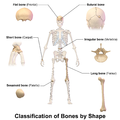 Classification of Bones
 -
 Femur Distribution of Forces
 -
 Long bone
 -
 Structure of a Long Bone


See also[edit]


Ad. Transform your life with W8MD's
GLP-1 weight loss injections special from $29.99 with insurance
|
WikiMD Medical Encyclopedia |
Medical Disclaimer: WikiMD is for informational purposes only and is not a substitute for professional medical advice. Content may be inaccurate or outdated and should not be used for diagnosis or treatment. Always consult your healthcare provider for medical decisions. Verify information with trusted sources such as CDC.gov and NIH.gov. By using this site, you agree that WikiMD is not liable for any outcomes related to its content. See full disclaimer.
Credits:Most images are courtesy of Wikimedia commons, and templates, categories Wikipedia, licensed under CC BY SA or similar.
Translate this page: - East Asian
中文,
日本,
한국어,
South Asian
हिन्दी,
தமிழ்,
తెలుగు,
Urdu,
ಕನ್ನಡ,
Southeast Asian
Indonesian,
Vietnamese,
Thai,
မြန်မာဘာသာ,
বাংলা
European
español,
Deutsch,
français,
Greek,
português do Brasil,
polski,
română,
русский,
Nederlands,
norsk,
svenska,
suomi,
Italian
Middle Eastern & African
عربى,
Turkish,
Persian,
Hebrew,
Afrikaans,
isiZulu,
Kiswahili,
Other
Bulgarian,
Hungarian,
Czech,
Swedish,
മലയാളം,
मराठी,
ਪੰਜਾਬੀ,
ગુજરાતી,
Portuguese,
Ukrainian
